

The early years of a child’s life are a period of rapid growth and discovery. During this time, children begin to explore their surroundings, develop essential skills, and lay the foundations for their future learning.
When we talk about “early abilities”, we mean those first signs of development in areas such as movement, communication, social awareness, and problem-solving. These are not only vital for academic success later on but also for a child’s confidence and independence.
It is important to remember that no two children are the same, and while developmental milestones provide useful guidance, each child will progress at their own pace.
By recognising and supporting these early abilities, parents and carers can help children grow in a way that feels natural and encouraging, rather than pressured or rushed.
Understanding Early Abilities
Early abilities span several key areas of development. Physical abilities include both gross motor skills, such as running and climbing, and fine motor skills, like holding a crayon or fastening buttons.
Cognitive development reflects a child’s growing curiosity, problem-solving skills, and early understanding of numbers and patterns.
Language and communication emerge as children begin to babble, form words, and eventually string together sentences.
Social and emotional growth is equally important, as children learn to share, make friends, and recognise their own and others’ feelings.
While developmental charts can offer guidance on what might be expected at certain ages, they should not be viewed as rigid rules. Each child has their own unique journey, and variations in the pace of development are perfectly natural.
What matters most is providing an environment where children feel safe, loved, and encouraged to explore their abilities without fear of failure.

How Parents and Carers Can Support Development at Home
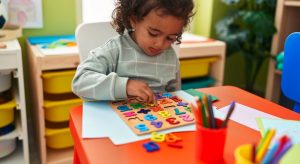
Play is one of the most powerful ways to nurture early abilities. Activities such as imaginative role play, building with blocks, or completing simple puzzles all support different areas of development in a fun and engaging manner.
Through play, children practise problem-solving, develop coordination, and build confidence in their own ideas.
Encouraging creative activities, like drawing, singing, or storytelling, also gives children an outlet to express themselves while strengthening their communication skills.
Talking and listening are equally important. Narrating everyday routines, singing songs, and reading aloud are simple but highly effective ways to boost language and comprehension.
Giving children time to respond, even if it is only through gestures or sounds, helps them feel heard and valued.
By weaving learning into daily life, parents and carers create countless opportunities to support growth naturally and enjoyably.
The Role of Early Years Settings
Nurseries and early years settings play a vital role in supporting children’s early abilities. With trained practitioners and structured activities, children are exposed to a wide range of opportunities that help them grow in all areas of development.
These environments are designed to spark curiosity, nurture independence, and create a balance between structured learning and free play.
Equally important is the social interaction that takes place in these settings. Group play allows children to develop crucial social skills, such as sharing, cooperation, and understanding different perspectives.
Being part of a community helps children learn empathy, resilience, and confidence, giving them a strong foundation not only for school but for life beyond the classroom.
Recognising and Responding to Individual Needs
Every child develops in their own way, and sometimes additional support may be needed to help a child reach their full potential. Parents and practitioners should keep an eye out for signs that a child may need more encouragement in certain areas, whether that’s speech, motor skills, or social interaction.
Early intervention, when needed, can make a significant difference, providing children with tailored strategies to overcome challenges.
It is also important to approach these needs with understanding and positivity.
Labelling or comparing children can be discouraging, but by focusing on their strengths and offering gentle support in areas of difficulty, both parents and practitioners can create an environment where children feel confident to try, make mistakes, and grow.
Building a Strong Home–Nursery Partnership
A strong partnership between home and nursery is key to supporting early abilities. Sharing updates, observations, and achievements ensures that both parents and practitioners are working together to meet a child’s needs.
Simple communication, such as daily check-ins or progress notes, helps build trust and gives everyone a clearer picture of how a child is developing.
Consistency is also crucial. When children see that the same values and expectations are reinforced both at home and in their nursery setting, they feel more secure and confident.
Extending nursery activities into home life, such as continuing a story they’ve enjoyed at school or practising new skills during family time, helps to reinforce learning and gives children a sense of continuity.

Conclusion
Supporting early abilities in childhood is about more than ticking boxes on a developmental chart—it is about giving children the confidence, tools, and opportunities to thrive in their own way.
By focusing on play, communication, and nurturing curiosity, parents and carers can make everyday moments meaningful learning experiences.
Above all, it is important to celebrate small achievements and encourage children at every step. These early abilities are the building blocks for lifelong learning, resilience, and confidence.
With the right support, children can grow into curious, capable individuals ready to take on whatever comes their way.