
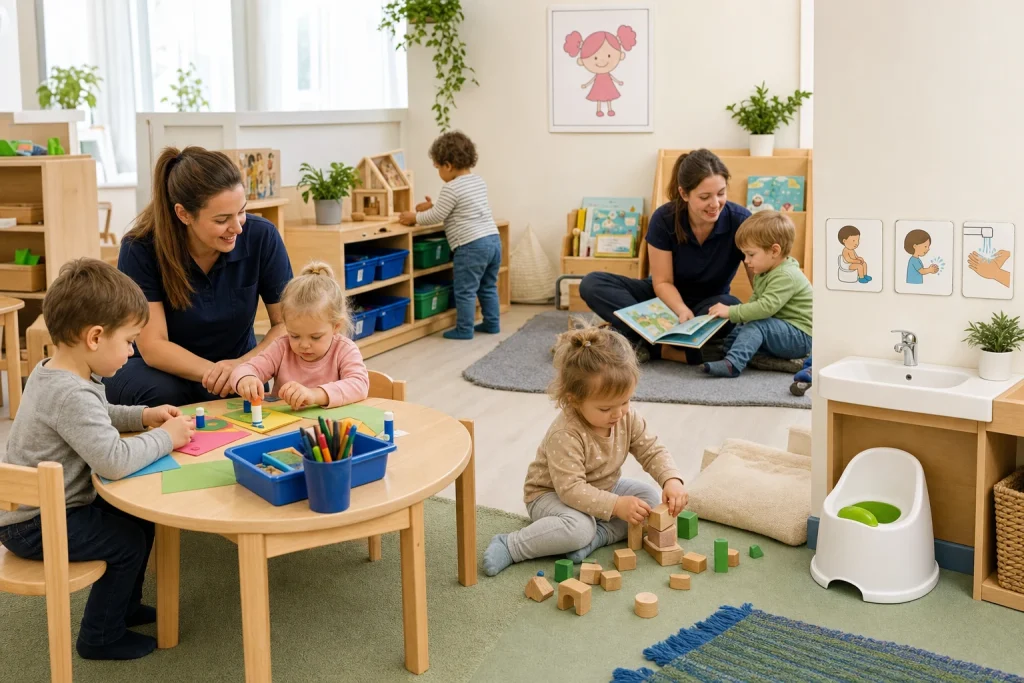
Potty training can feel like one of those big toddler milestones that everyone has an opinion on. Some children seem keen very early, while others are simply not interested yet, and both can be completely normal.
The most helpful starting point is readiness, not age alone. When parents and nursery carers look for the same signs, toddlers get a calmer, more consistent experience at home and during their nursery day.
Why readiness matters more than age
There is no perfect week when every child should start potty training. Toddlers develop bladder control, communication, confidence and body awareness at different speeds. A child may be physically ready before they feel emotionally ready, or they may be curious about the potty before they can reliably get there in time.
Starting before a child is ready can lead to frustration for everyone. It can also turn toileting into a battle, which is the last thing any parent wants. Waiting for clearer signs does not mean putting it off forever. It means giving your child the best chance to succeed with encouragement rather than pressure.
In a nursery setting, staff often see children across many routines, including meals, naps, outdoor play, story time and transitions. That wider view can help parents understand whether a toddler is showing readiness across the day or only in short bursts. If your child attends nursery, it is worth asking what carers have noticed and whether they think your child is beginning to show a pattern.
Parents looking for a calm early years environment can learn more about nursery routines that support toddlers and how consistent care helps children manage daily milestones.
Physical signs your toddler may be ready
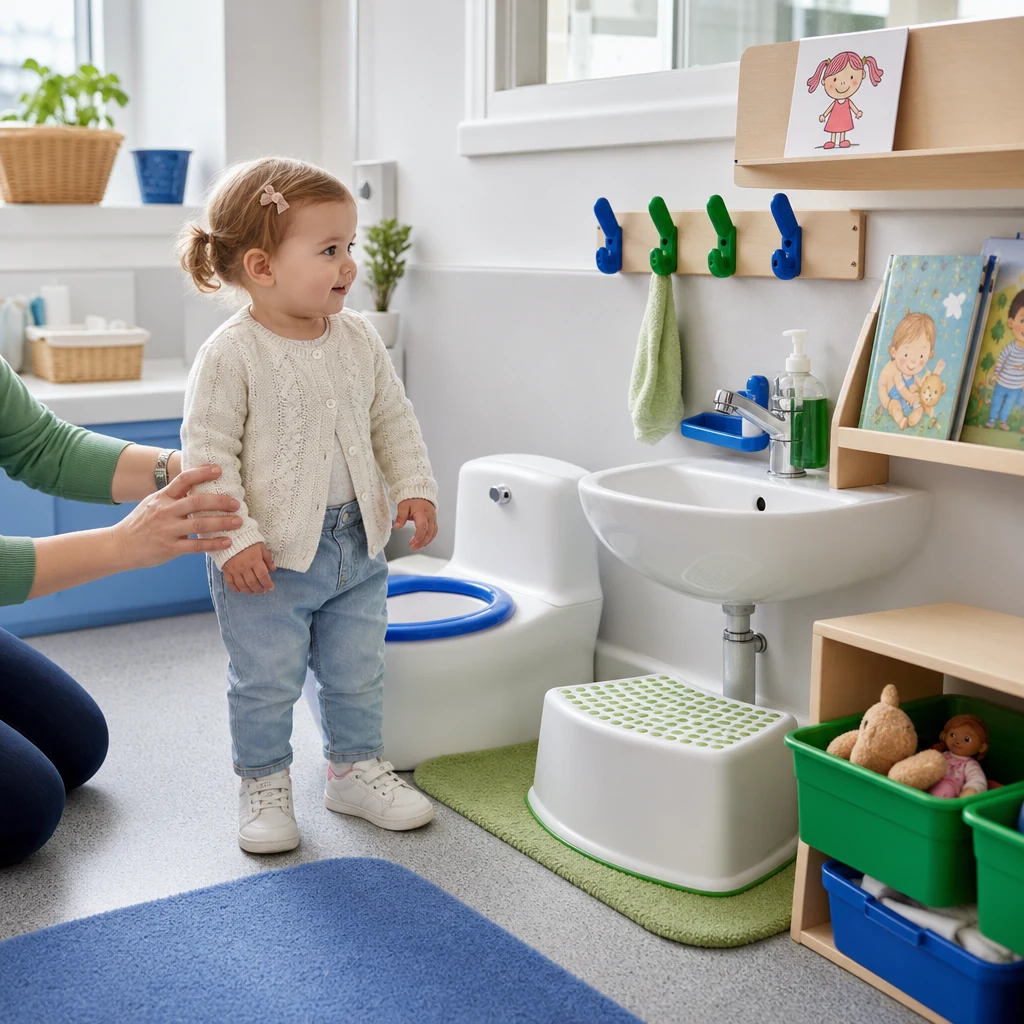
The first signs are often practical. Your toddler may stay dry for longer periods, especially after a nap or between nappy changes. This can suggest they are developing more bladder control. They may also have more predictable bowel movements, which makes it easier to introduce sitting on the potty at sensible times.
Another useful sign is awareness. Your child might pause, hide, squat, touch their nappy or tell you when they are doing a wee or poo. Some children announce it afterwards first. That still matters, because it shows they are beginning to connect the feeling in their body with what has happened.
Movement skills are important too. A child needs to be able to get to the potty, sit safely, stand up and manage simple clothing with some help. They do not need to do everything alone at the start, but easy waistbands and calm support make the process much smoother.
Look for a group of signs rather than one isolated moment. A dry nappy one morning does not mean your toddler is fully ready. A few signs happening regularly is a stronger clue that the next step may be worth trying.
- Dry nappies for longer stretches during the day
- More predictable bowel movements
- Noticing or telling you when their nappy is wet or dirty
- Showing interest in the toilet, potty or bathroom routine
- Being able to sit steadily and follow simple instructions
Emotional and communication signs to watch for
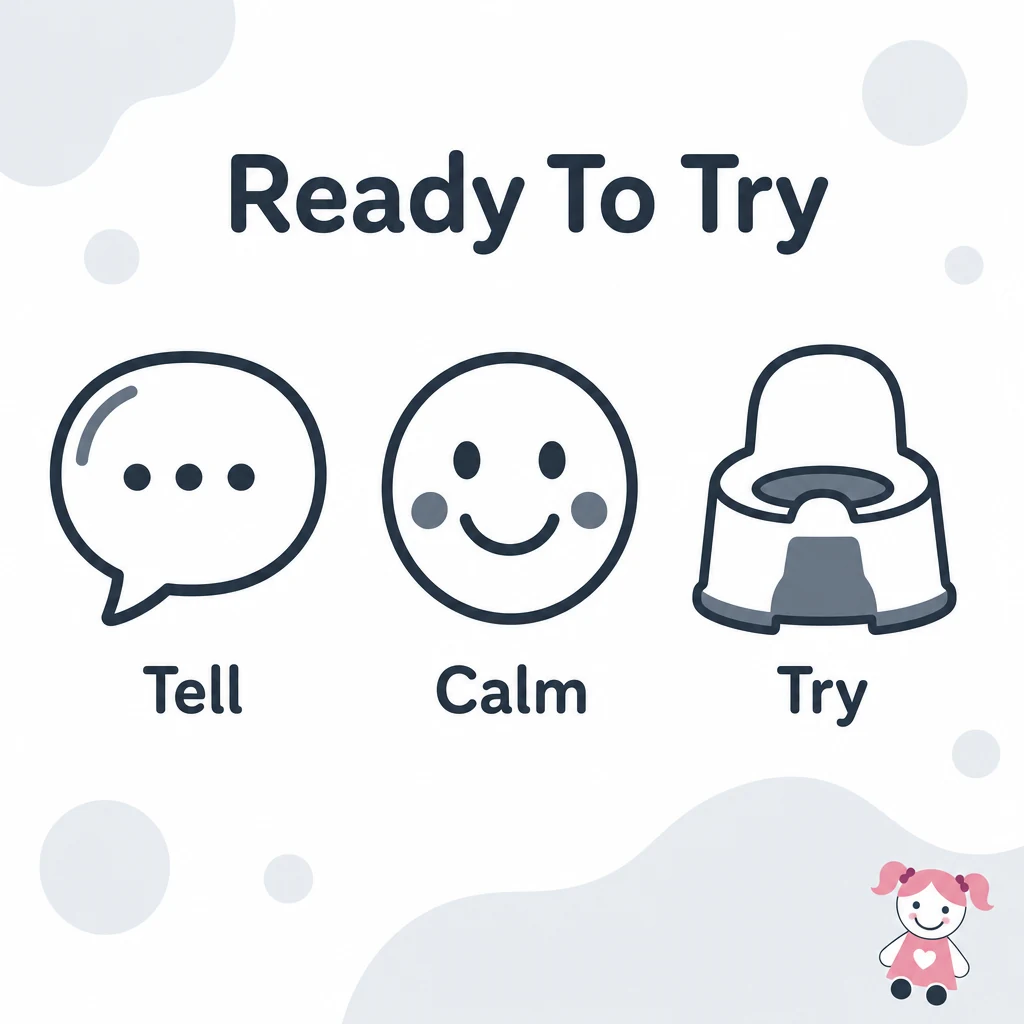
Potty training is not only about the body. A toddler also needs enough confidence, interest and language to take part. They might use words, signs or gestures to tell you they need a change, want the potty or feel uncomfortable in a wet nappy.
Some children become curious when they see older siblings or other children using the toilet. They may want to flush, wash hands, choose pants or sit on the potty for a moment with clothes on. Curiosity is a positive sign, even if they are not ready for a full change yet.
It also helps if your toddler can manage simple instructions such as, “come to the bathroom”, “sit down” or “wash hands”. They do not need perfect speech. What matters is that they can understand the basic routine and communicate enough for adults to help them.
Confidence is easy to overlook. If a child is anxious about the potty, scared of the toilet, upset by accidents or going through a big change, it may be better to slow down. A gentle pause can protect their confidence. You can still talk about the potty, read simple books and let them practise sitting without expecting results.
Nursery can play a useful role here because toddlers often respond well to familiar routines and gentle encouragement from trusted adults. If your child is preparing for wider independence, you may also find it helpful to read about how nursery helps children build confidence for future routines.
How to start without pressure
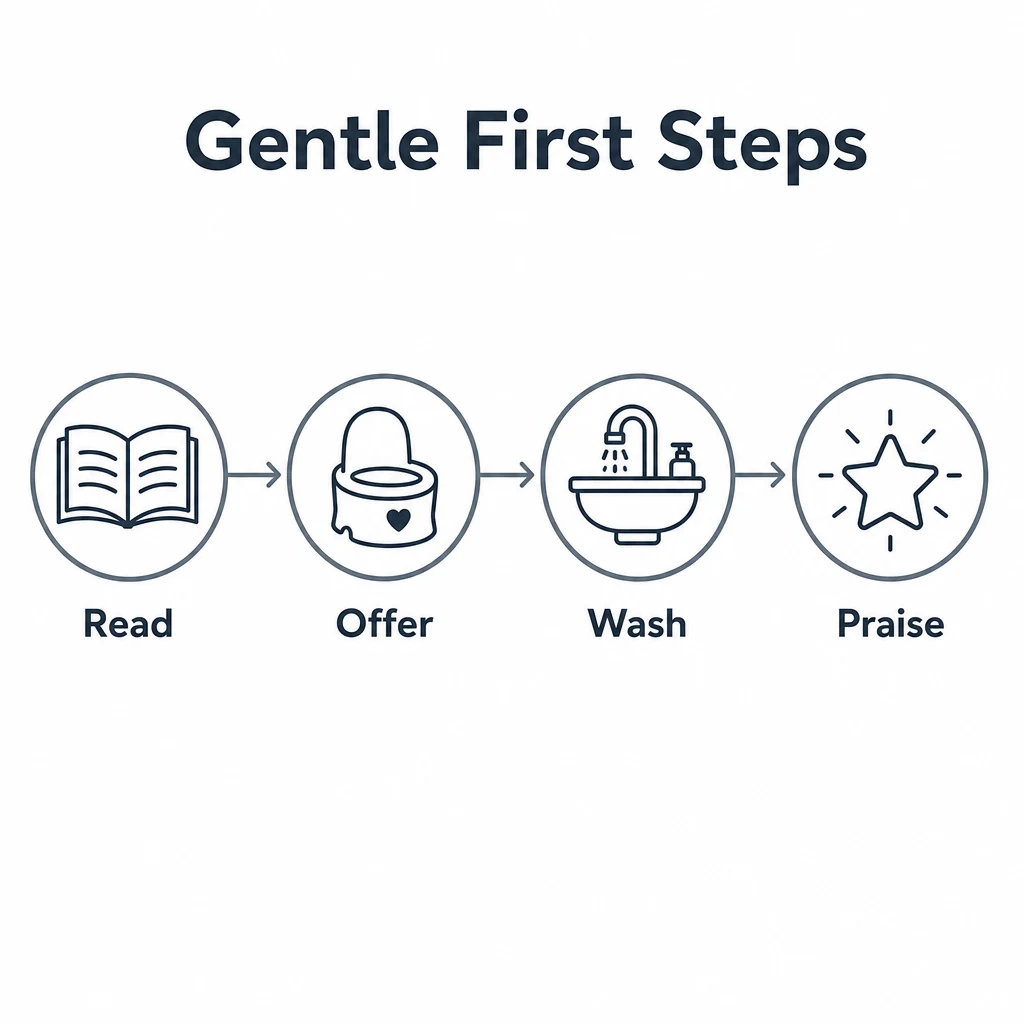
Once your child is showing several signs, begin gently. Put the potty somewhere easy to reach and explain what it is for in simple language. Let your toddler sit on it briefly at natural times, such as after waking, before a bath or before getting dressed. Keep it calm and ordinary.
Avoid turning every sit into a test. Some children need days or weeks of becoming familiar with the potty before anything happens. Praise effort, cooperation and communication, not just success. “You sat on the potty” or “you told me your nappy was wet” are useful comments because they show your child what they did well.
Clothing can make a big difference. Simple trousers, leggings or skirts are easier than fiddly fastenings. If your child is moving from nappies to pants, choose a time when you can be present and patient. You do not need to clear your entire calendar, but it helps to avoid starting during a very unsettled week.
At nursery, consistency matters. Tell carers what words you use at home, whether your child is using a potty or toilet seat, and how often you are offering a try. Share what motivates your child and what tends to upset them. If everyone uses similar language and expectations, your toddler does not have to work out two different systems.
If you are considering nursery care and want to understand how daily routines are handled, supportive daycare for young children can give parents a helpful sense of what consistent care looks like.
What to do about accidents and setbacks
Accidents are part of potty training. They are not a sign that your child is being difficult or that you have done something wrong. Toddlers are still learning to notice body signals, stop what they are doing, get to the potty, manage clothing and sit in time. That is a lot of steps.
Keep your reaction steady. Clean up without fuss and use simple words such as, “wee goes in the potty, we can try again next time”. Shame and disappointment can make children hide accidents or resist the potty. Calm repetition works better.
Setbacks can happen after illness, tiredness, travel, a new sibling, a room move or changes in routine. If accidents suddenly increase, think about what else may be going on. Some children need a temporary step back, such as using pull ups for outings or returning to more frequent reminders. That does not erase progress.
It is also sensible to keep an eye on discomfort. If your child seems in pain, is holding wee for a long time, becomes very distressed or you are worried about constipation, seek advice from a health professional. Potty training should be supported, but health concerns deserve proper attention.
Working together with nursery
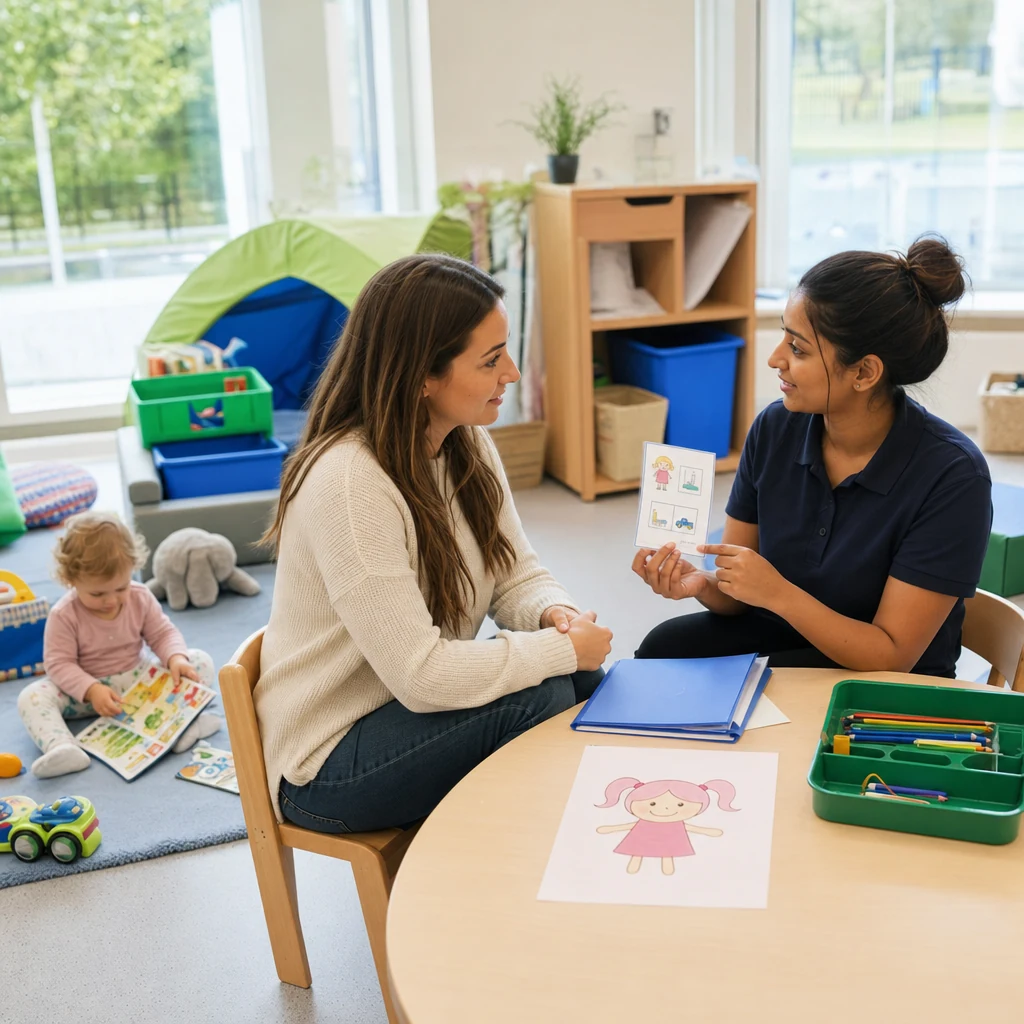
A shared approach between home and nursery can make potty training feel much less confusing for your child. Start with a conversation before making big changes. Ask whether staff have noticed dry nappies, interest in the potty, predictable timings or signs your child needs changing.
Agree the practical details. This may include spare clothes, wipes, bags, easy clothing and whether your child will use a potty, child toilet seat or small toilet. Let staff know the words your family uses, especially if your child has a preferred phrase or gesture.
It is also helpful to decide how updates will be shared. Some parents want to know every try, while others prefer a simple summary at the end of the day. The main aim is to spot patterns without making toileting the focus of the whole nursery experience.
Good early years care treats potty training as one part of a child’s wider development. Independence grows through dressing, hand washing, asking for help, joining routines and feeling proud of small steps. Families exploring childcare options may find a nurturing nursery environment helpful when thinking about everyday support for toddlers.
- Readiness is shown through a mix of physical, emotional and communication signs, not age alone.
- Staying dry for longer, noticing wet or dirty nappies and showing interest in the potty are useful signs.
- Start gently with short, natural potty tries and praise effort as well as success.
- Accidents are normal. Calm, simple responses protect your child’s confidence.
- Home and nursery routines work best when adults use similar language and expectations.
Frequently asked questions
What age should potty training start?
There is no single right age. Some toddlers show signs earlier than others. It is usually better to look for readiness signs such as longer dry periods, awareness of nappies and interest in the potty, rather than starting because of age alone.
Should I use rewards for potty training?
Some families find simple praise enough, while others use small rewards. If you do use rewards, keep them low pressure and focus on effort, such as sitting, trying or telling an adult. Avoid making your child feel they have failed after an accident.
What if my toddler refuses to sit on the potty?
Pause and keep things relaxed. Let the potty stay available, talk about it simply and try again later. Refusal often means a child needs more time, more control or less pressure.
How can nursery help with potty training?
Nursery can support potty training by following agreed routines, offering gentle reminders, helping with clothing and sharing observations with parents. Consistency between home and nursery helps toddlers feel secure.
A calm next step
If your toddler is beginning to show signs of potty training readiness, a gentle shared approach can make the process feel more manageable. Minnie and Mamma Nursery supports children with everyday routines, confidence and independence at a pace that feels right for them.