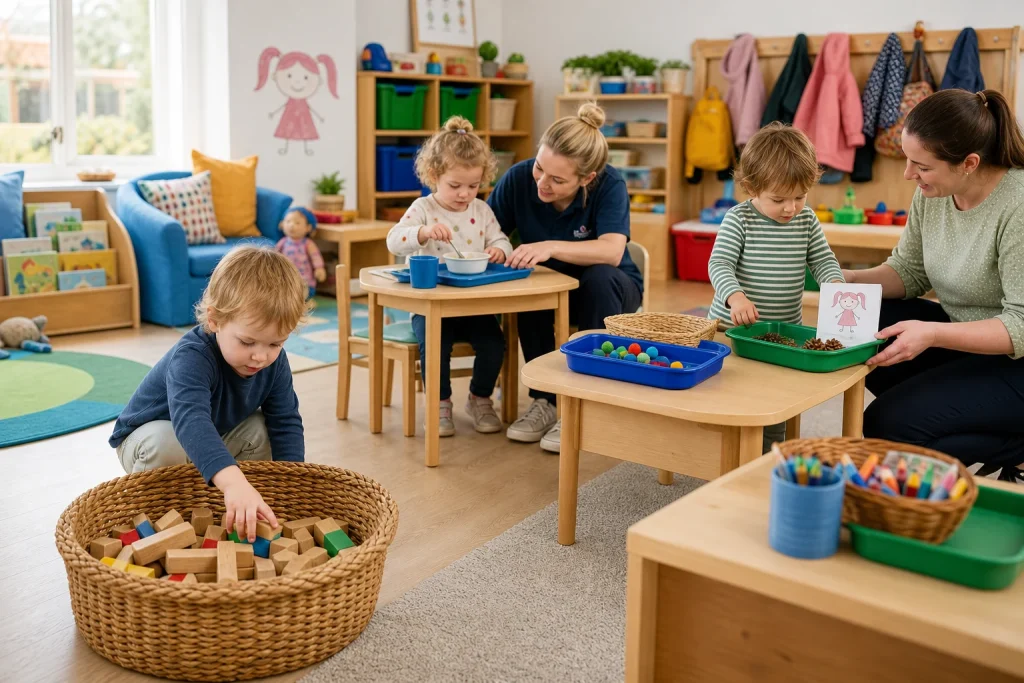
Independence in the early years rarely arrives in one big moment. It grows through tiny daily wins, such as pulling on socks, choosing a book, washing hands, pouring water, or putting toys back in the basket.
For many parents, the question is how much help to give. You want your child to feel capable, but you also need mornings, meals and bedtimes to keep moving. The good news is that self help skills can be encouraged gently, without pressure, and in ways that make everyday family life calmer.
Why self help skills matter in the early years
Self help skills are the practical things children learn to do for themselves. They include dressing, feeding, toileting, washing hands, carrying belongings, making simple choices, helping at tidy up time and joining in with routines.
These skills are not just about getting tasks done. They help children understand that they can contribute, solve small problems and keep trying. A child who learns to zip a coat, scrape a plate or choose between two activities is also learning patience, coordination, language and confidence.
Independence also supports emotional development. When children feel trusted with simple responsibilities, they often become more willing to attempt new things. They begin to see themselves as capable people, not just people who are always waiting for adults to do things for them.
In early years settings, independence is usually built into the flow of the day. Children might be encouraged to find their own peg, wash their hands before snack, choose resources, help pack away, or try dressing for outdoor play. Families looking for a caring nursery environment can find more about supportive early years care and how daily routines can help children grow in confidence.
Start with what your child can almost do
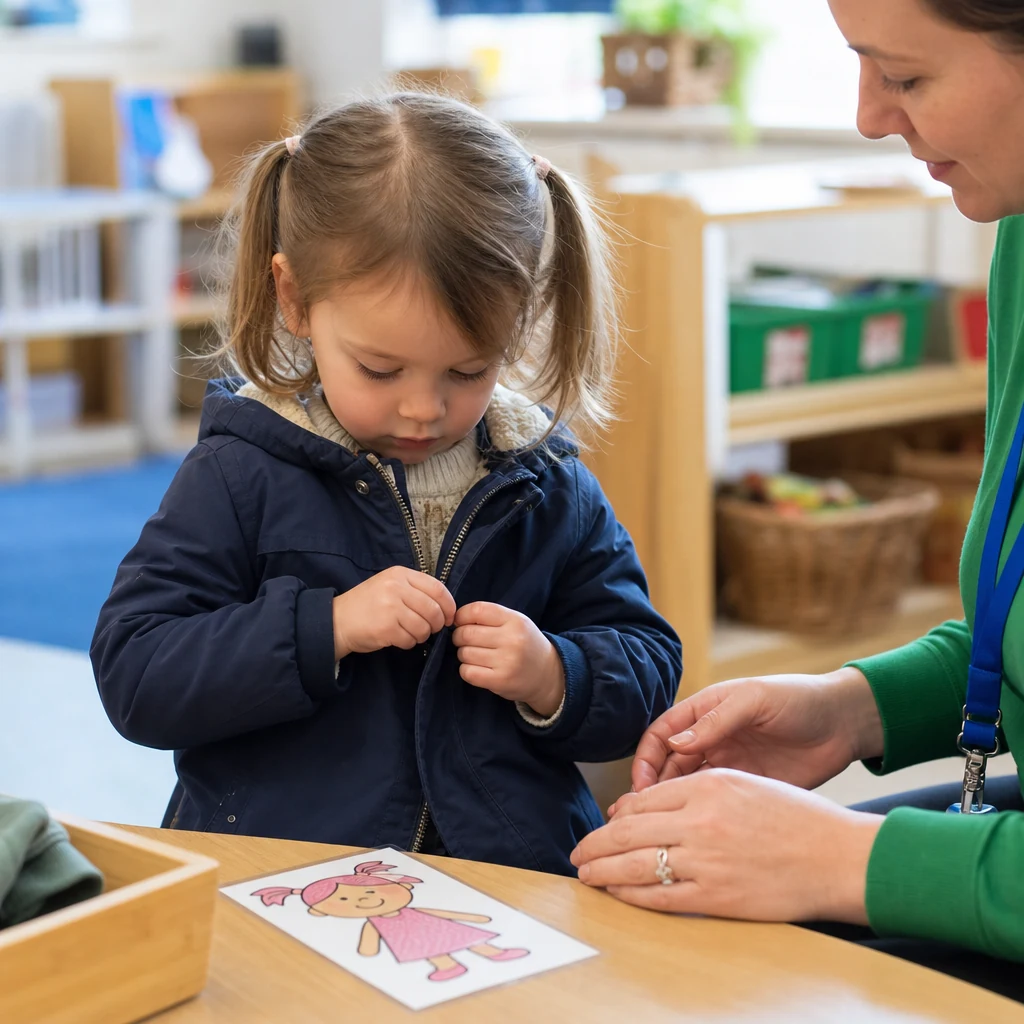
The most useful place to begin is the edge of your child’s current ability. If a task is too easy, it will not build much confidence. If it is too hard, it can quickly lead to frustration. The sweet spot is something they can nearly do with a little support.
For example, a toddler may not be able to put on shoes fully, but they might be able to fetch them, open the fastening, or push one foot in. A preschool child may not manage every button, but they may be able to start with larger ones. A child who cannot yet tidy a whole room can still place blocks in one box.
Try breaking everyday tasks into small steps:
- Ask your child to find the item first.
- Show the next step slowly.
- Let them try before stepping in.
- Offer a clue instead of doing it straight away.
- Celebrate effort, not just success.
A useful phrase is, I will help with the tricky bit. This lets your child know they are not alone, while still giving them ownership of the task. Over time, the tricky bit gets smaller.
Make routines predictable and child friendly
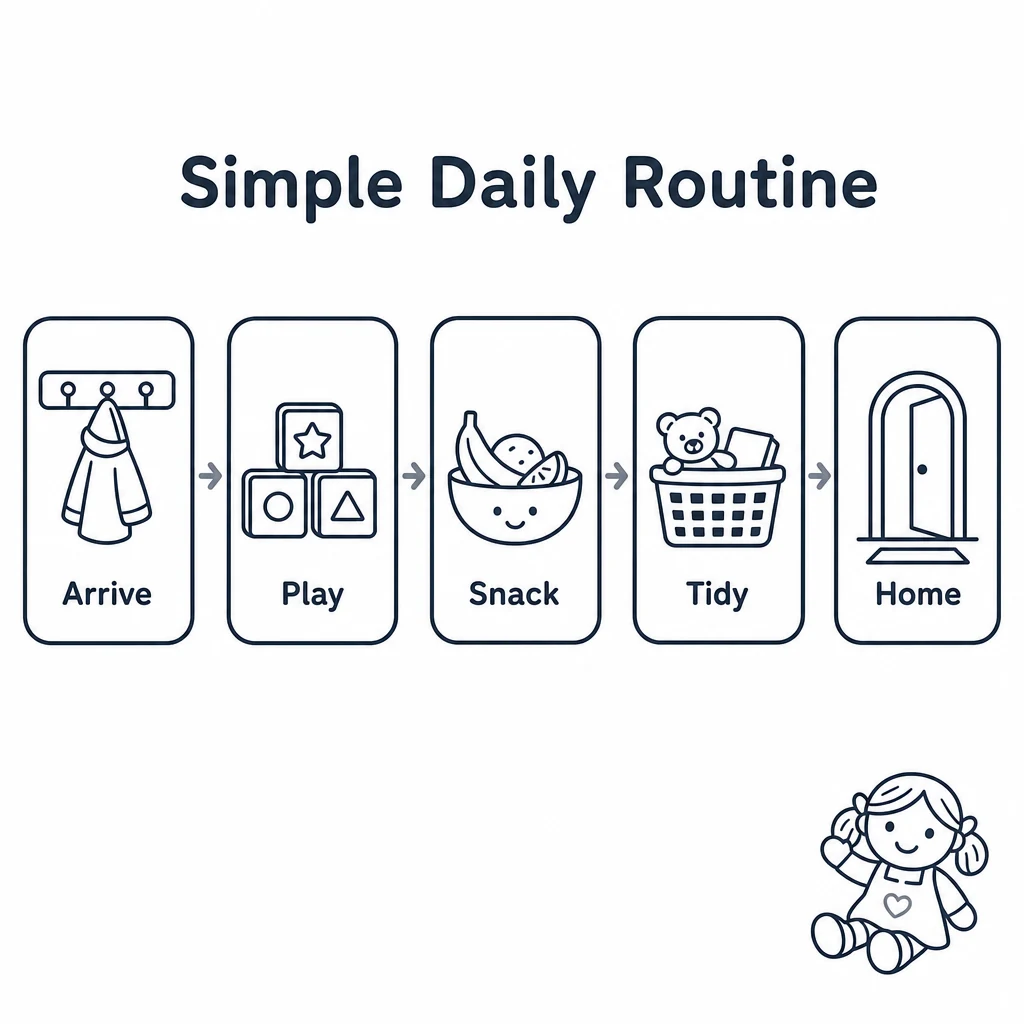
Children are more likely to act independently when they know what comes next. Predictable routines reduce the amount of adult instruction needed, because the rhythm of the day starts to guide them.
Morning routines are a good example. Instead of giving many separate instructions, keep the order simple and familiar: toilet, wash hands, get dressed, breakfast, shoes, bag. Some families use pictures or a short list so children can check what comes next. This can be especially helpful for children who find verbal instructions hard to hold in mind.
Mealtimes can work in the same way. Children can help carry safe items, choose between two healthy options, pour with support, use a napkin, and put their cup or plate in an agreed place afterwards. These small actions make them active participants in family life.
Tidy up time often works best when it is specific. Tidy your toys can feel too broad. Put the cars in the basket is much clearer. Songs, timers and shared tidying can help, but the goal is not perfection. The goal is helping children understand that looking after a space is something everyone does together.
Nursery routines can also reinforce these habits. Daily group rhythms, shared resources and peer learning all help children practise independence in a social setting. This is one reason early friendships and group play can be so valuable, as explored in the benefits of children making childhood friends at nursery.
Encourage dressing, washing and toileting with patience
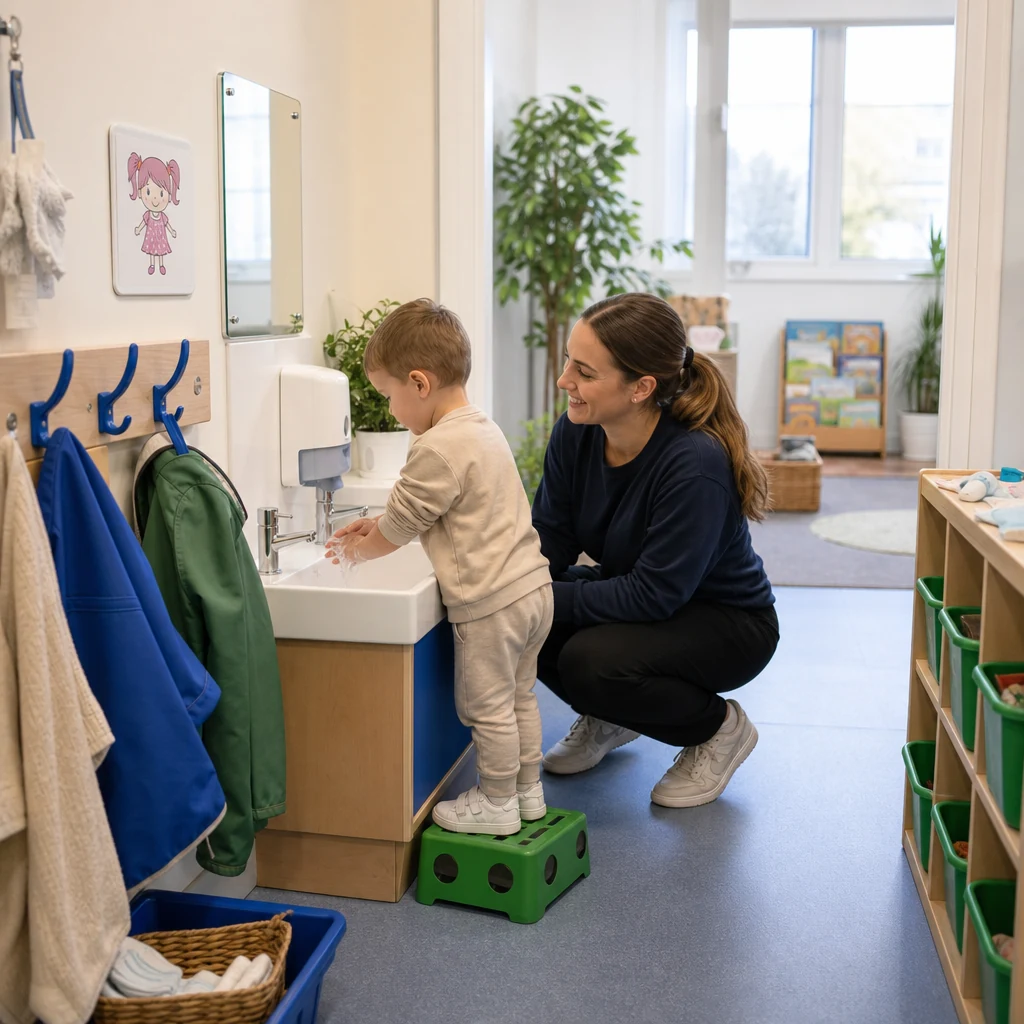
Dressing is one of the biggest early self help milestones, but it can also be one of the slowest. Clothes involve balance, grip, sequencing and body awareness. A child has to understand where their body is in space while also managing fastenings, sleeves, labels and shoes.
To make dressing easier, offer clothes that give your child a realistic chance of success. Elasticated waists, clear fronts and backs, larger fastenings and easy shoes can all help. If mornings are rushed, practise at calmer times, such as after bath time or during play.
Hand washing is another important independence skill. Young children often need reminders about using soap, rubbing hands and drying properly. A short routine works well: sleeves up, tap on, hands wet, soap, rub, rinse, dry. Keep the language consistent so your child can eventually talk themselves through the steps.
Toileting is best handled with calm support and realistic expectations. Children develop readiness at different times. Confidence grows when adults avoid shame and keep the process predictable. Encourage children to notice body signals, manage clothing where they can, wash hands afterwards and ask for help when needed.
If your child attends nursery, it can help when home and nursery use similar language around care routines. Parents can speak with practitioners about what their child is practising, so the same small steps are encouraged in both places.
Use choices without giving too many options
Choice is a powerful way to build independence, but too much choice can overwhelm young children. Two options are often enough. Would you like the red cup or the yellow cup? Shall we read this story or that one? Do you want to put away the blocks or the books first?
Limited choices help children feel respected while keeping the adult boundary clear. The adult decides what needs to happen. The child gets a say in how it happens. This is especially useful during transitions, when children may resist being moved from one activity to another.
It also helps to offer choices before frustration builds. A child who is already upset may find decision making harder. Calm moments are the best time to practise.
Good choices for young children include:
- Which jumper to wear from two suitable options.
- Which story to read before sleep.
- Which toy to pack away first.
- Whether to hold a hand or hold the pushchair.
- Which fruit to have at snack time.
As children mature, choices can gradually become wider. They may begin to plan parts of their play, choose resources for a craft, decide how to solve a simple problem, or take responsibility for belongings. Families considering nursery can also look at how daily care and early learning routines support children as they become more independent.
What to do when your child says no
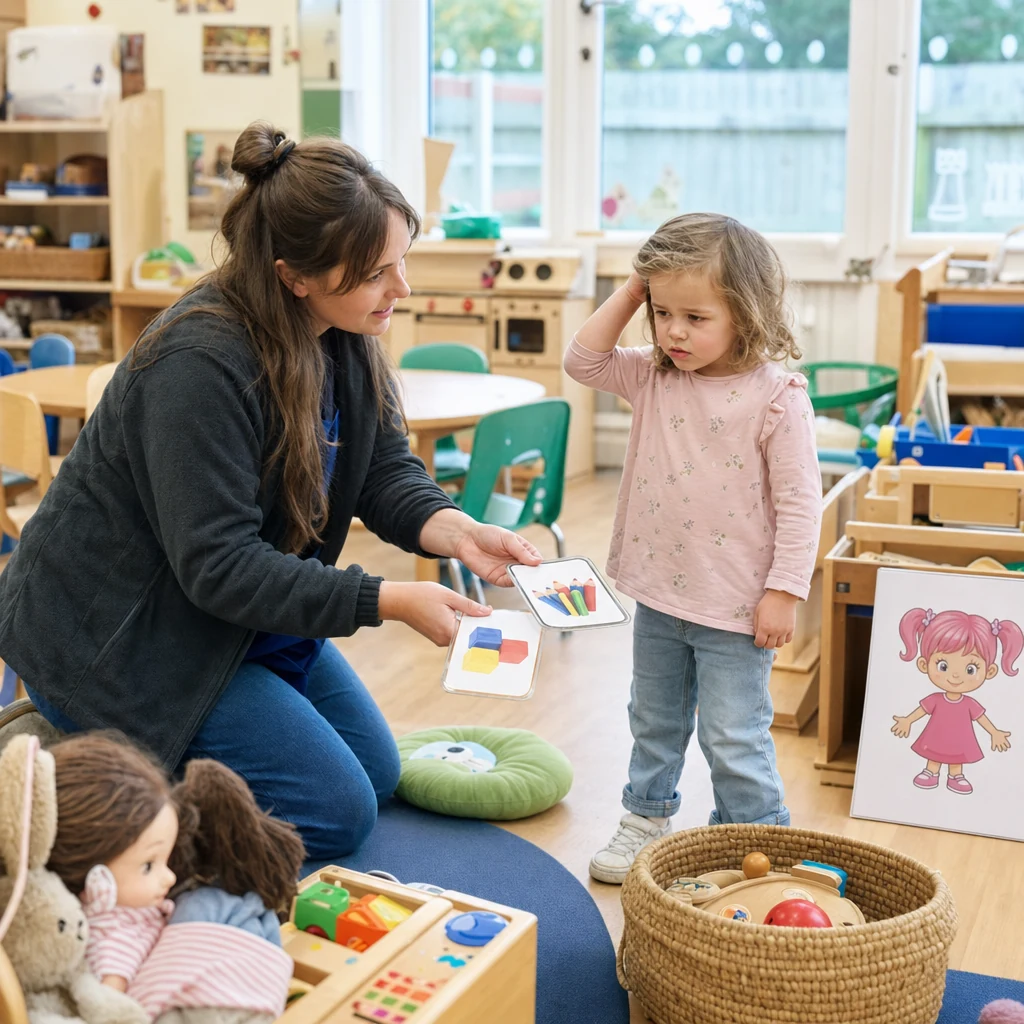
Refusal is a normal part of developing independence. Sometimes a child says no because they want control. Sometimes they are tired, hungry, unsure, overstimulated, or worried they will get it wrong. The response matters more than the refusal itself.
Start by staying calm and reducing the size of the request. If putting on a coat feels too much, ask them to find the sleeve. If tidying the whole room feels impossible, ask them to pick up three items. If washing hands is becoming a battle, return to the familiar routine and offer a small choice.
Try to avoid turning every self help task into a test. Children need practice, but they also need adults who notice when support is needed. There will be days when your child can do something independently and days when they need more help. That does not mean progress has disappeared.
Useful phrases include:
- You try first, then I can help.
- Let us do one step each.
- I can see this is hard today.
- We have time for one more try.
- You did the first part by yourself.
The aim is to keep independence linked with confidence, not pressure. When children feel safe to try, pause, ask for help and try again, they are building the emotional skills that sit underneath practical independence.
- Self help skills grow through small daily routines, not sudden leaps.
- Children build confidence when adults give enough support without taking over too quickly.
- Predictable routines, limited choices and clear language make independence easier.
- Dressing, washing, toileting and tidying all need patience and repeated practice.
- Refusal is normal, and calm support helps children keep trying.
Frequently asked questions
What age should my child start learning self help skills?
Children begin practising simple self help skills from toddlerhood, although every child develops at their own pace. Start with small tasks your child can nearly manage, such as fetching shoes, putting toys in a basket, washing hands with help, or choosing between two options.
Should I step in if my child is taking a long time?
It depends on the moment. If there is time, let them try and offer gentle prompts. If you are genuinely in a rush, help with the task and practise later when things are calmer. Independence grows best when children are not constantly under pressure.
How can I encourage tidying without it becoming a battle?
Keep the request small and specific. Instead of asking your child to tidy everything, ask them to put one type of toy in one place. Join in at first, use consistent routines, and praise the effort of helping rather than expecting a perfect result.
Can nursery help with independence at home?
Yes. Nursery routines often give children regular chances to manage belongings, wash hands, make choices, tidy resources and take part in group activities. When parents and practitioners share what a child is working on, children can practise the same skills in both settings.
Support your child as they grow
If you are exploring nursery care that encourages confidence, kindness and everyday independence, Minnie and Mamma Nursery offers a warm place for children to learn through routine, play and gentle support.