
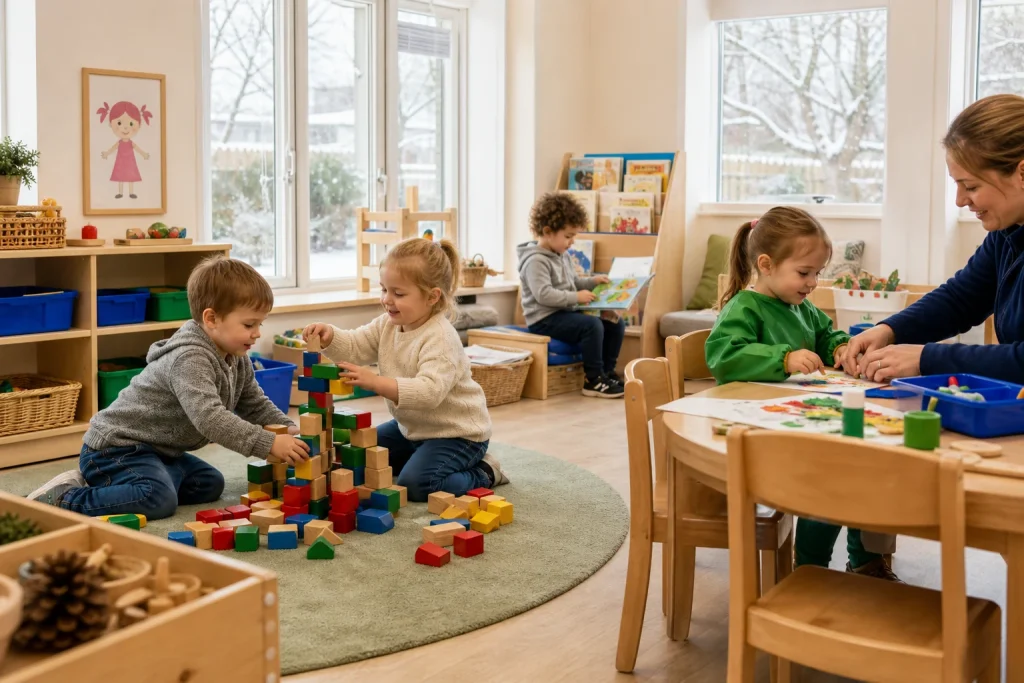
Cold, wet days can make toddler life feel very small very quickly. When outdoor time is limited, parents are often left trying to protect the sofa, keep everyone cheerful and avoid relying on screens for every spare moment.
The good news is that toddlers do not need complicated activities to stay busy. They need safe space, simple choices, repetition, movement, conversation and a little freedom to explore. The ideas below are practical indoor winter activities you can set up at home with everyday items, while supporting the same kinds of early learning that matter in nursery.
Start with a simple rhythm for the day
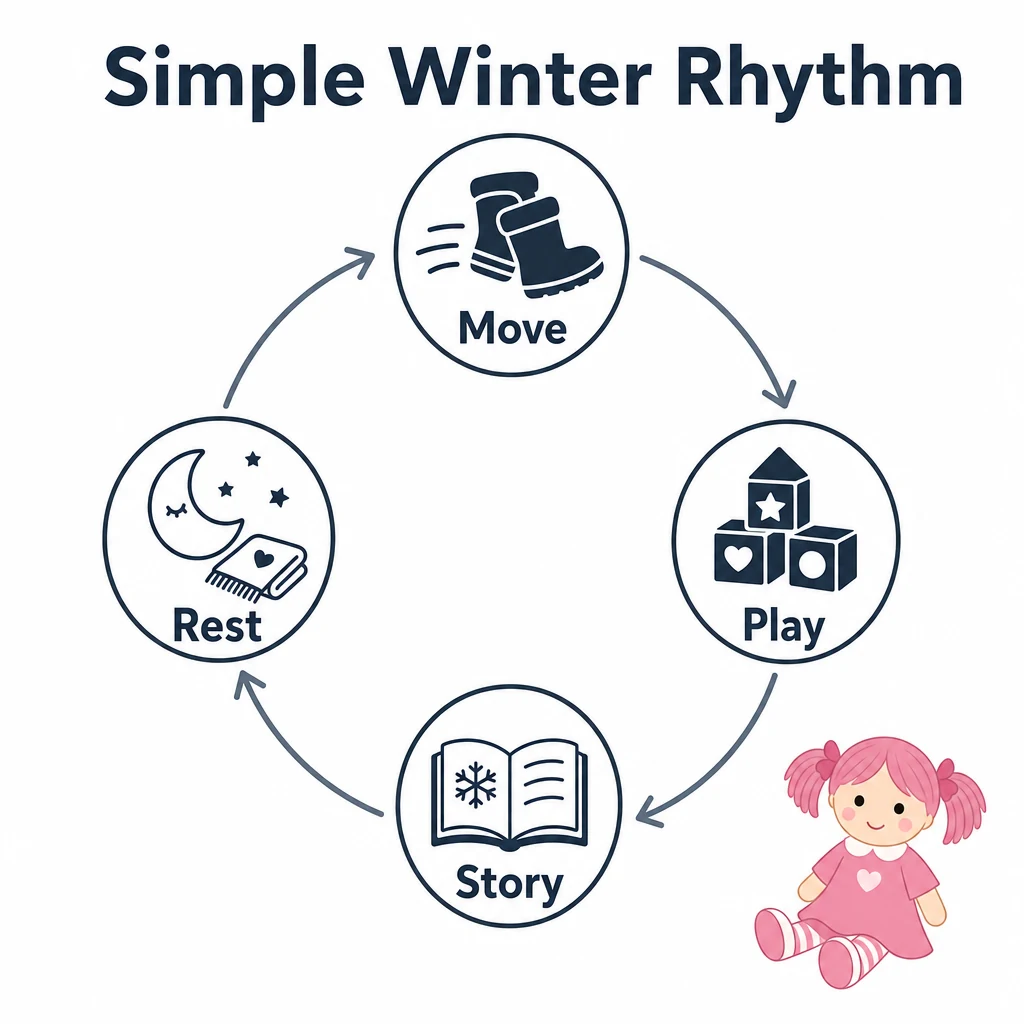
Winter days are easier when toddlers know what is coming next. A loose rhythm can reduce frustration because children feel more secure when the day has familiar patterns. This does not need to be a strict timetable. It can be as simple as active play, snack, quiet play, lunch, rest, creative play and tidy up.
Try creating small activity blocks rather than expecting one idea to fill a whole morning. Toddlers often move quickly from one interest to another, and that is normal. A ten minute activity that ends happily is far better than stretching it until everyone feels cross.
You might keep a small list on the fridge with three types of play to choose from:
- Move, such as dancing, crawling, jumping or obstacle games.
- Make, such as drawing, sticking, building or pretend cooking.
- Rest, such as books, puzzles, songs or calm sensory play.
This balance matters because toddlers need both energy release and settling time. Nursery routines often work in a similar way, with busy group moments balanced by calmer activities. If you would like to see how a childcare setting uses play across the day, Minnie and Mamma shares more about its daily nursery activities.
Use movement games to burn energy indoors
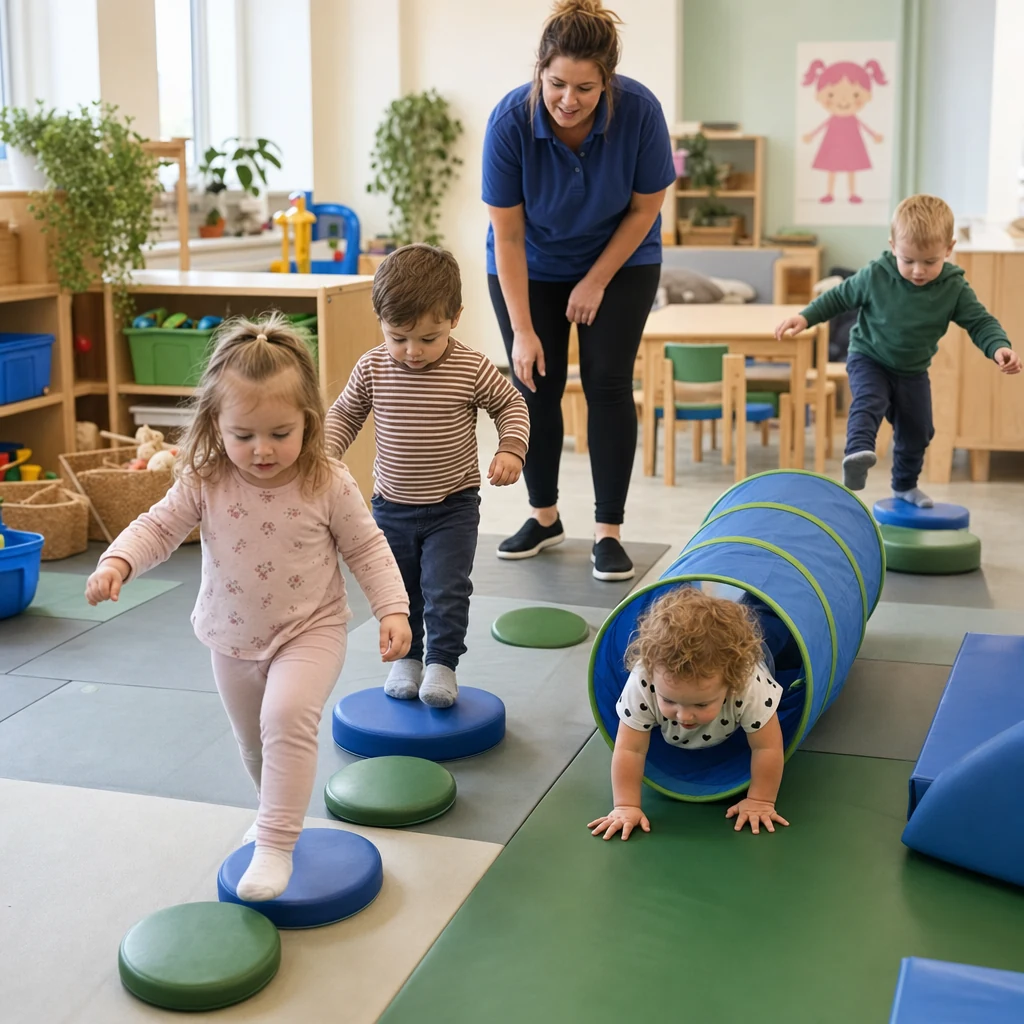
Toddlers need to move their bodies, even when the weather keeps them inside. Movement supports balance, coordination, confidence and mood. It also helps children practise listening, waiting and following simple instructions.
Clear a safe area first, then choose activities that fit your space. A hallway, living room floor or cleared corner can become a mini movement zone. Keep the rules simple and repeat them often.
Good indoor movement ideas include:
- Animal walks, where your child crawls like a bear, hops like a frog or tiptoes like a mouse.
- Cushion stepping, using cushions as islands to step between while practising balance.
- Dance and freeze, where music plays, everyone dances, then freezes when it stops.
- Tape paths, with masking tape on the floor for walking, jumping or driving toy cars along.
- Soft ball rolling, which is calmer than throwing and helps with turn taking.
If your toddler struggles when a game ends, give a clear warning before the final turn. For example, say, Two more jumps, then we are getting a drink. Ending with a predictable next step can make transitions smoother.
Group movement activities are also useful for social confidence because children learn to copy, wait, share space and notice others. Minnie and Mamma has a helpful article on developing social skills through group activities if you want to understand why these simple games matter.
Set up sensory play without making the whole room messy
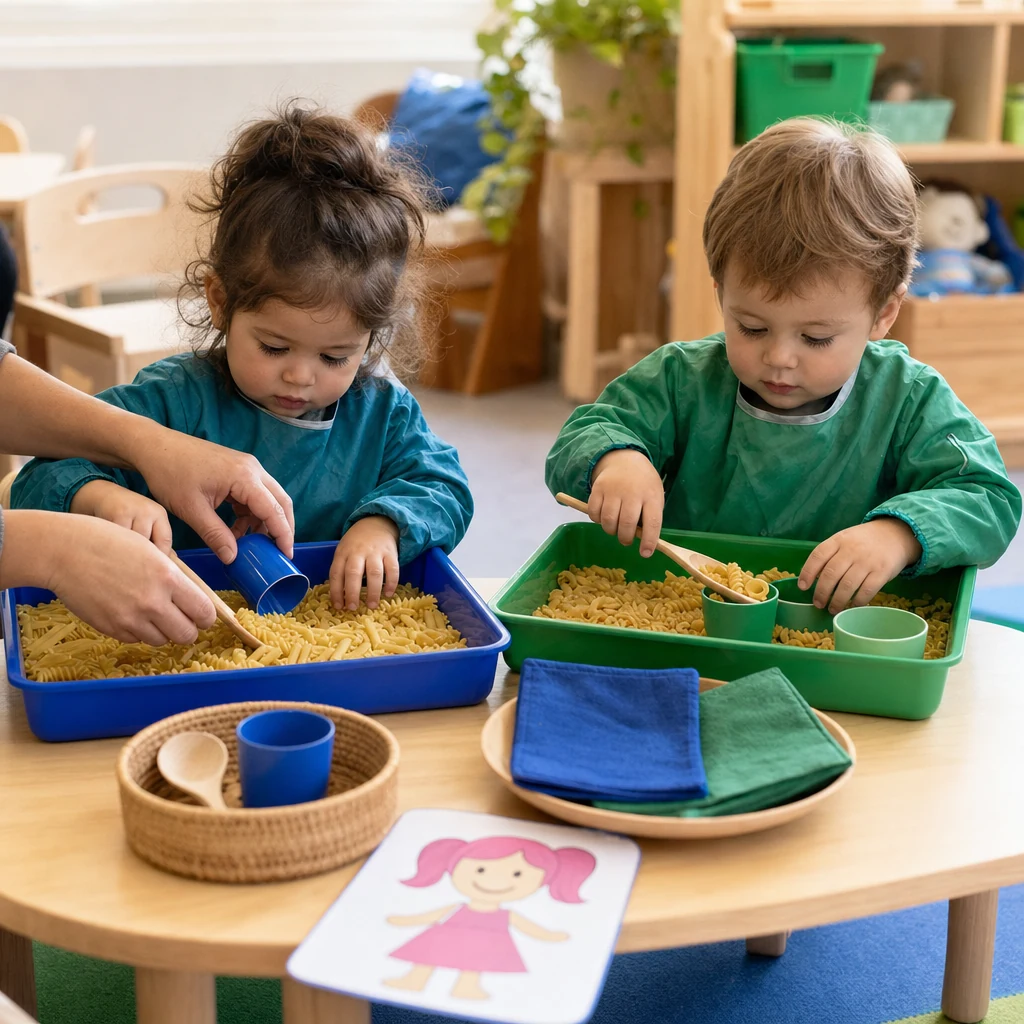
Sensory play is one of the easiest ways to keep toddlers focused indoors. It gives busy hands something meaningful to do and encourages early problem solving. The trick is to keep it contained, simple and easy to clean.
Use a tray, washing up bowl or shallow storage box as the play area. Put a towel underneath if needed. Start with small amounts, because toddlers often enjoy scooping, pouring and sorting more than having lots of materials.
Simple sensory ideas include dry pasta with cups and spoons, water with floating toys, oats with small bowls, paper scraps for tearing, or play dough with safe household tools. You can also add sorting challenges, such as placing big pieces in one cup and small pieces in another.
Stay close and choose materials that are suitable for your child. If your toddler still puts things in their mouth, avoid small objects and use safer options. Water play should always be supervised, even when the amount of water is shallow.
Sensory play also supports language. Instead of asking too many test style questions, narrate what is happening. Say things like, You are pouring the oats, That spoon is full, or The dough feels soft. These little comments build vocabulary naturally and help your child connect words with real experiences.
Bring stories, songs and pretend play into winter afternoons
When toddlers become restless, adults often look for a brand new activity. Sometimes the better answer is to make a familiar activity feel fresh. Stories, songs and pretend play are ideal for this because they can change with your child’s mood and interests.
Try turning a favourite book into an activity. If the story has animals, act out the sounds. If it has food, set up a pretend picnic. If it has vehicles, build a road with blocks or cushions. This helps toddlers move from listening to doing, which keeps them engaged for longer.
Story baskets can work well too. Choose a small basket or bag and add a few safe objects linked to a simple theme, such as bedtime, shopping, cooking or babies. Your toddler can pull out each item and help make up the story. There is no need for a perfect plot. The value is in listening, naming, copying and imagining.
Songs are especially useful when everyone is tired. Action songs help children follow instructions, practise rhythm and enjoy repetition. Slower songs can support calm time before a nap or bedtime.
If your toddler is just beginning to talk, pause during familiar songs and stories so they can fill in a word, sound or action. Minnie and Mamma also has guidance on encouraging language development through storytelling, which is useful for parents who want play to support communication without turning it into formal teaching.
Make creative play feel easy, not perfect
Creative play does not need to produce something neat enough to keep. For toddlers, the process matters much more than the finished picture. Mark making, sticking, tearing, squeezing and mixing all build fine motor skills and confidence.
Keep a small creative box with paper, chunky crayons, glue sticks, child safe scissors if appropriate, stickers, old envelopes, cardboard tubes and scraps from clean packaging. When the box is ready, you can set up a quick activity without searching around the house.
Good winter creative ideas include:
- Big paper drawing, where paper is taped to the table or floor so your child can make large movements.
- Sticker rescue, where stickers are placed on a tray and your toddler peels them off to decorate paper.
- Cardboard building, using boxes and tubes to make houses, tunnels or towers.
- Collage trays, with safe scraps for choosing, arranging and sticking.
- Pretend cafe, using paper plates, cups and play dough food.
Try to avoid correcting too much. If the sky is green or the glue goes in an unexpected place, that is still learning. You can model gently by making your own version beside them, rather than taking over their work.
Creative play is also a good place to talk about feelings. A child might make a stormy picture, a happy face or a pretend meal for someone they miss. These small moments can open calm conversations about emotions. For more on this, see Minnie and Mamma’s advice on building emotional intelligence in toddlers.
Know when to slow the pace down
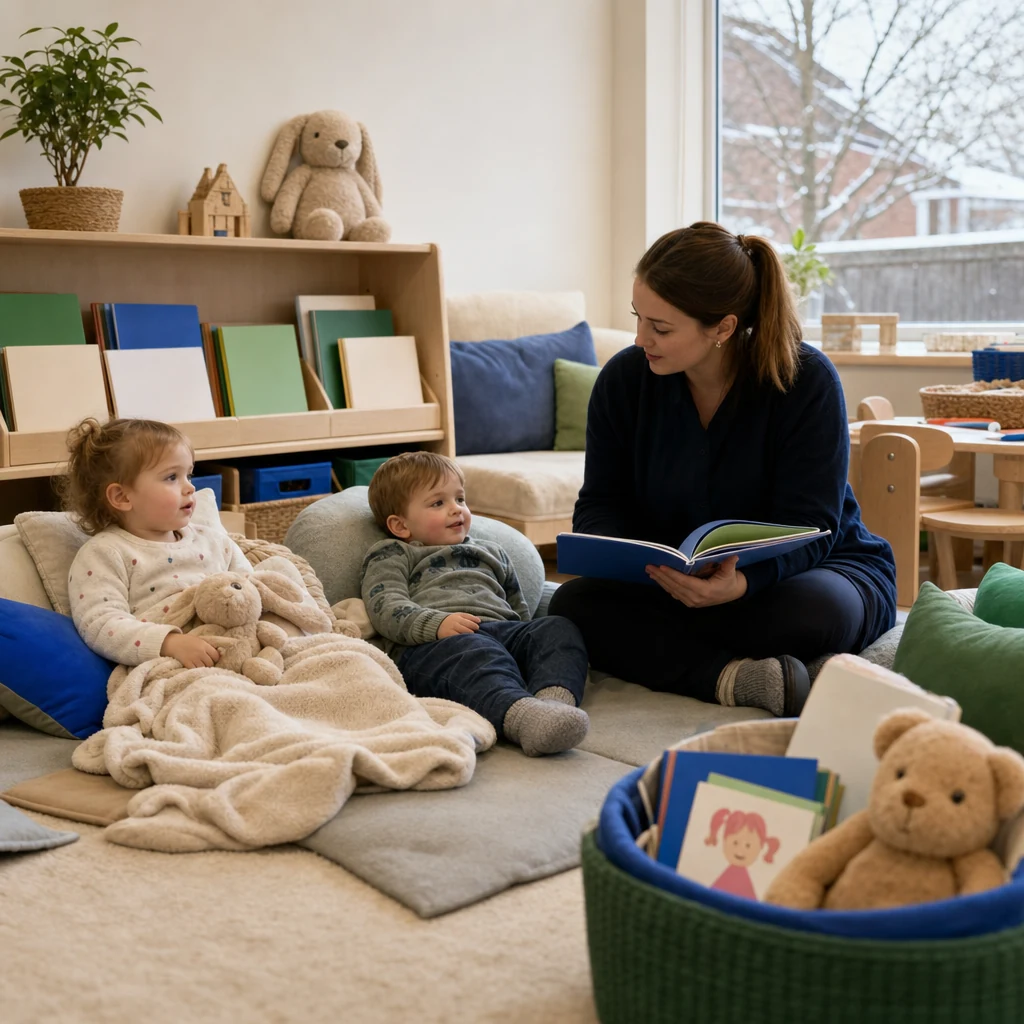
Not every indoor winter activity needs to be busy. Toddlers can become overwhelmed by too much noise, choice and adult direction. If your child is rubbing their eyes, throwing toys, refusing every idea or moving from activity to activity without settling, they may need less stimulation rather than more.
Calm activities can still be engaging. Try puzzles, threading with large safe pieces, matching socks, looking through family photos, washing toy animals in a bowl, or sorting toys by colour, size or type. These activities give toddlers something to do while bringing the energy level down.
You can also create a cosy quiet routine after lunch or before bedtime. Choose a few books, a soft toy, a blanket and a familiar song. Repeating the same pattern helps toddlers understand that their body is moving towards rest.
Parents sometimes worry that quiet play is not educational enough. In reality, calm focus is a valuable skill. When toddlers sit with a puzzle, listen to a story or carefully line up toys, they are practising attention, memory, patience and control. These skills support later learning and everyday confidence.
The most useful indoor winter activities are not the ones that look impressive. They are the ones that meet your child where they are that day.
- Short activity blocks often work better for toddlers than long planned sessions.
- A simple daily rhythm can help children feel calmer during indoor winter days.
- Movement, sensory play, stories, songs, pretend play and creative activities all support early development.
- Messy play is easier when it is contained in a tray, bowl or small play area.
- Quiet play matters too, especially when toddlers are tired or overstimulated.
Frequently asked questions
How long should an indoor toddler activity last?
Many toddlers only stay with one activity for five to fifteen minutes, and that is normal. It is better to offer short, positive bursts of play than to push an activity past your child’s interest.
What can I do if my toddler refuses every activity?
Start smaller. Offer two simple choices, such as blocks or books, and sit nearby without pressure. Hunger, tiredness, boredom and overstimulation can all look like refusal, so a snack, cuddle or quiet reset may help.
Are screens always a problem in winter?
Screens are part of many family homes, but it helps to have plenty of screen free options too. Active play, stories, sensory activities and pretend games give toddlers chances to move, talk, imagine and connect with you.
How can I keep indoor play safe?
Choose age suitable materials, stay close during water or sensory play, clear space for movement and remove small objects if your child still mouths items. Simple supervision makes most home activities much easier to enjoy.
Explore play that supports early learning
If you are looking for a nurturing nursery where play, routines and activities support children’s confidence every day, Minnie and Mamma would be happy to help you learn more.