
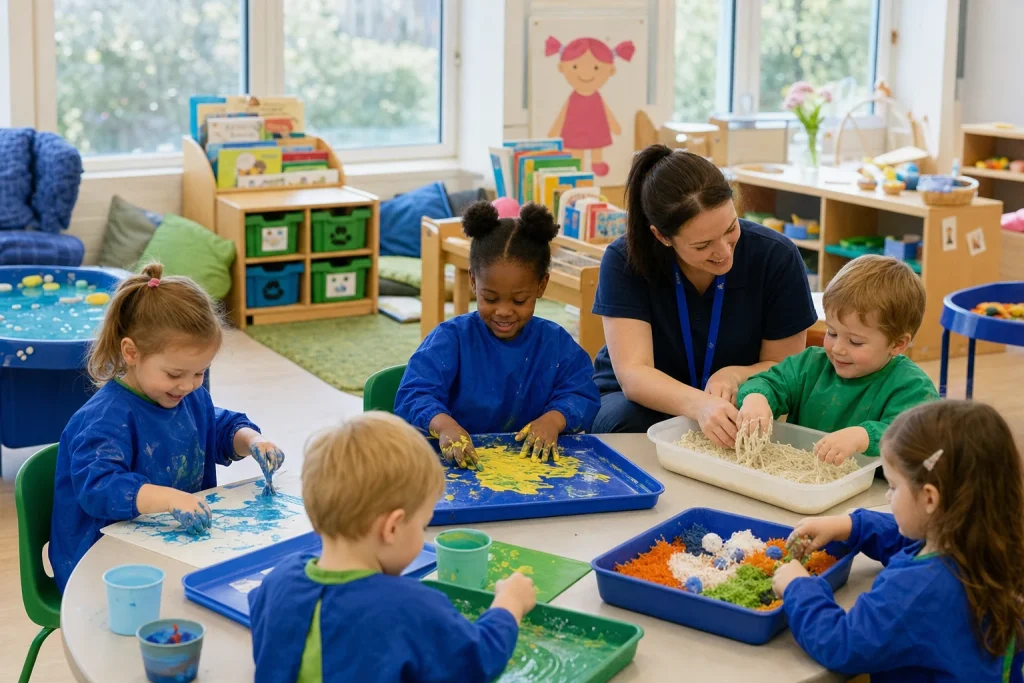
Messy play can look like chaos at first glance. A table covered in flour, paint on little fingers or water splashed across the floor might not seem like learning, but for young children it is often exactly that.
When children scoop, squish, pour, mix, smear and explore, they are building important early skills through their senses. Messy play gives them freedom to investigate the world in a safe, playful way, while developing confidence, communication, movement and problem solving.
What is messy play?
Messy play is any activity where children explore materials freely, often using their hands and senses. It might involve sand, water, paint, dough, mud, pasta, cereal, leaves, bubbles, jelly, foam or simple household ingredients. The focus is not on making something perfect. It is on discovery.
This matters because young children learn best through direct experience. They need to touch, test, repeat and make small decisions for themselves. What happens if I add more water? Can I squeeze this through my fingers? Why does this mixture feel sticky now? These questions may not be spoken out loud, but the thinking is happening.
For many parents, the word messy can feel slightly stressful. It can bring up thoughts of cleaning, stains and slippery floors. The good news is that messy play does not need to take over your home. With a tray, washable materials, old clothes and a simple plan, it can be manageable, enjoyable and genuinely valuable.
In nursery settings, messy play often sits within a wider programme of creative, physical and social learning. You can see how this fits into the broader daily nursery activities children enjoy as part of a balanced early years routine.
How messy play supports brain development
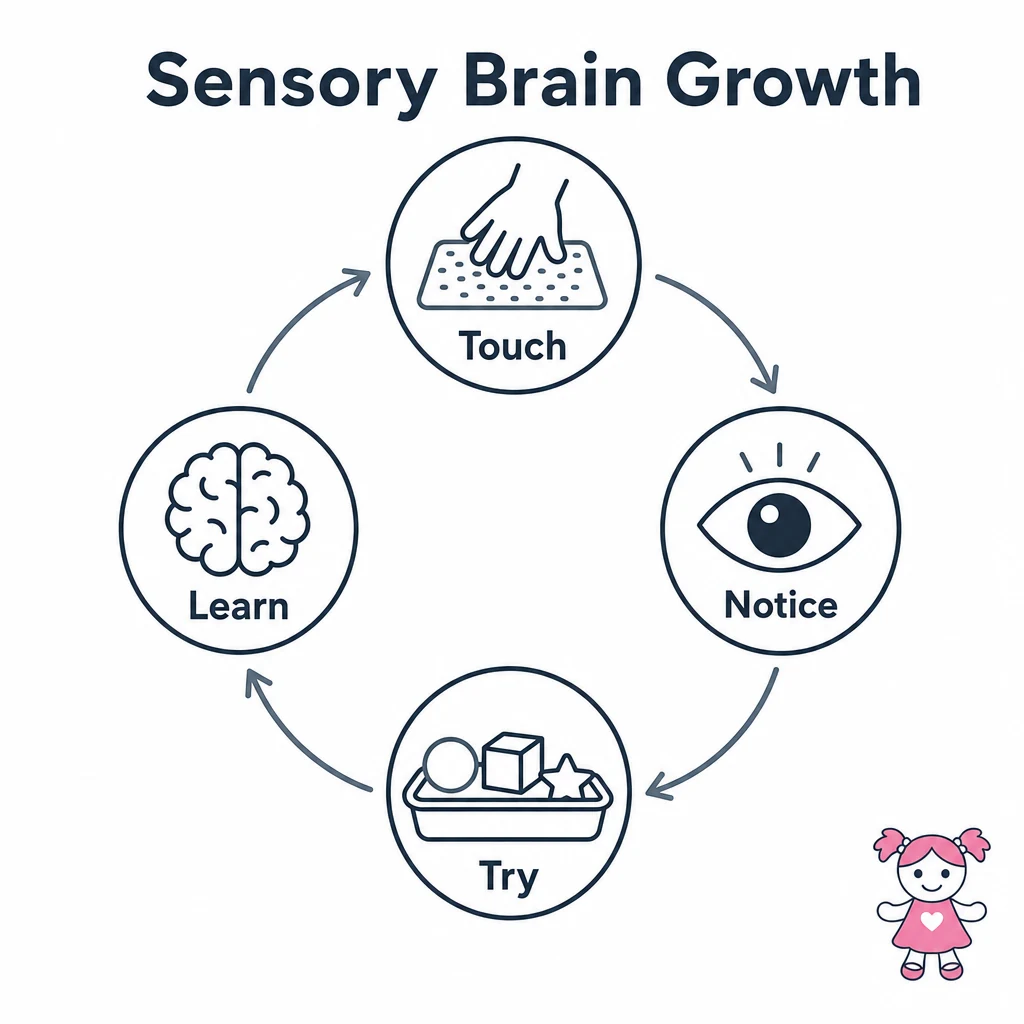
Messy play gives children rich sensory information. They notice texture, temperature, weight, movement, smell and sound. These sensory experiences help the brain make connections, compare ideas and understand cause and effect.
For example, pouring water from one cup to another introduces early maths and science concepts. Children begin to understand full and empty, heavy and light, fast and slow. Mixing colours supports observation and prediction. Playing with dough strengthens the hands while also encouraging imagination.
Messy play also supports concentration. A child may spend a long time stirring, patting, squeezing or sorting because the activity is interesting and open. There is no single correct result, so children can stay curious without worrying about getting it wrong.
This kind of exploration links closely with the power of play in early childhood development. Play is not a break from learning. For young children, play is one of the main ways learning happens.
The physical skills children build through messy play
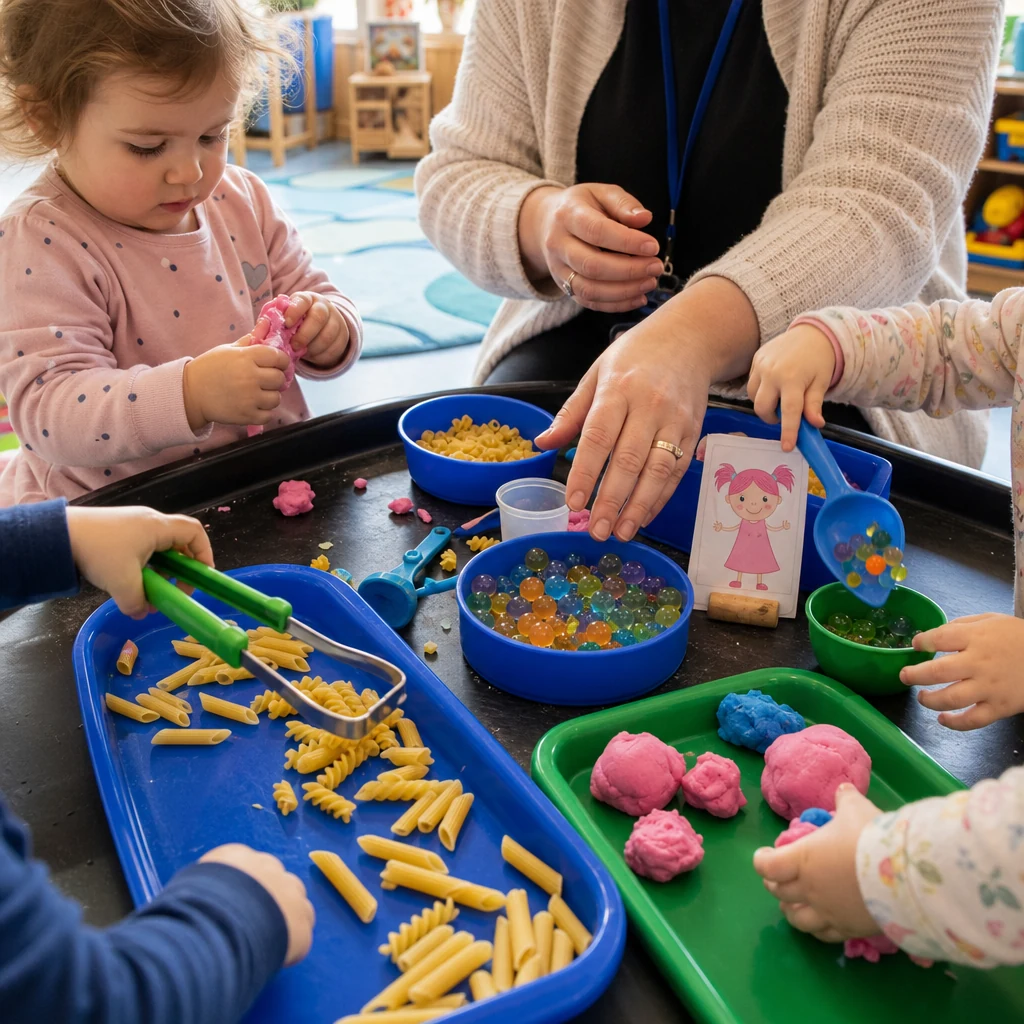
Messy play is brilliant for physical development because it encourages children to use their whole body and their smaller hand muscles. Scooping sand, squeezing sponges, rolling dough and tearing paper all help strengthen fingers, hands and wrists.
These movements support later skills such as holding pencils, using scissors, fastening buttons and feeding themselves with more control. Before children can write neatly, they need chances to build strength and coordination through play.
Messy activities also develop hand and eye coordination. When a child pours water into a cup, places pasta into a bowl or paints a shape on paper, they are learning to guide their movements with more accuracy. They may spill, miss or squash things at first, and that is part of the learning.
For younger children, messy play can also support balance and movement. Outdoor mud play, water play or large scale painting may involve reaching, bending, standing, carrying and moving around safely. These everyday actions build confidence in what their bodies can do.
Language, confidence and social skills
Messy play creates natural opportunities for conversation. Adults can introduce words such as smooth, rough, wet, dry, sticky, soft, warm, cold, pour, squeeze, mix and scoop. Children hear language connected to something they are actually experiencing, which helps the words make sense.
It also gives children reasons to communicate. They might ask for more water, tell you their mixture is too runny, explain what they are making or copy words they hear from another child. Even children who are quieter can often join in through pointing, showing, choosing and sharing materials.
Messy play can be especially helpful for confidence because there is less pressure to produce a perfect outcome. A child who feels unsure about drawing a picture may feel much freer when exploring paint with fingers, brushes, sponges or toy wheels. They can take part in their own way.
When children play together, they practise turn taking, sharing space, watching others and negotiating. They learn that another child may have a different idea, and they begin to manage small frustrations. These social lessons are just as important as the activity itself.
If you are interested in the wider role of games and activity based learning, this guide on how activities and games improve child development gives more useful context.
Simple messy play ideas to try at home
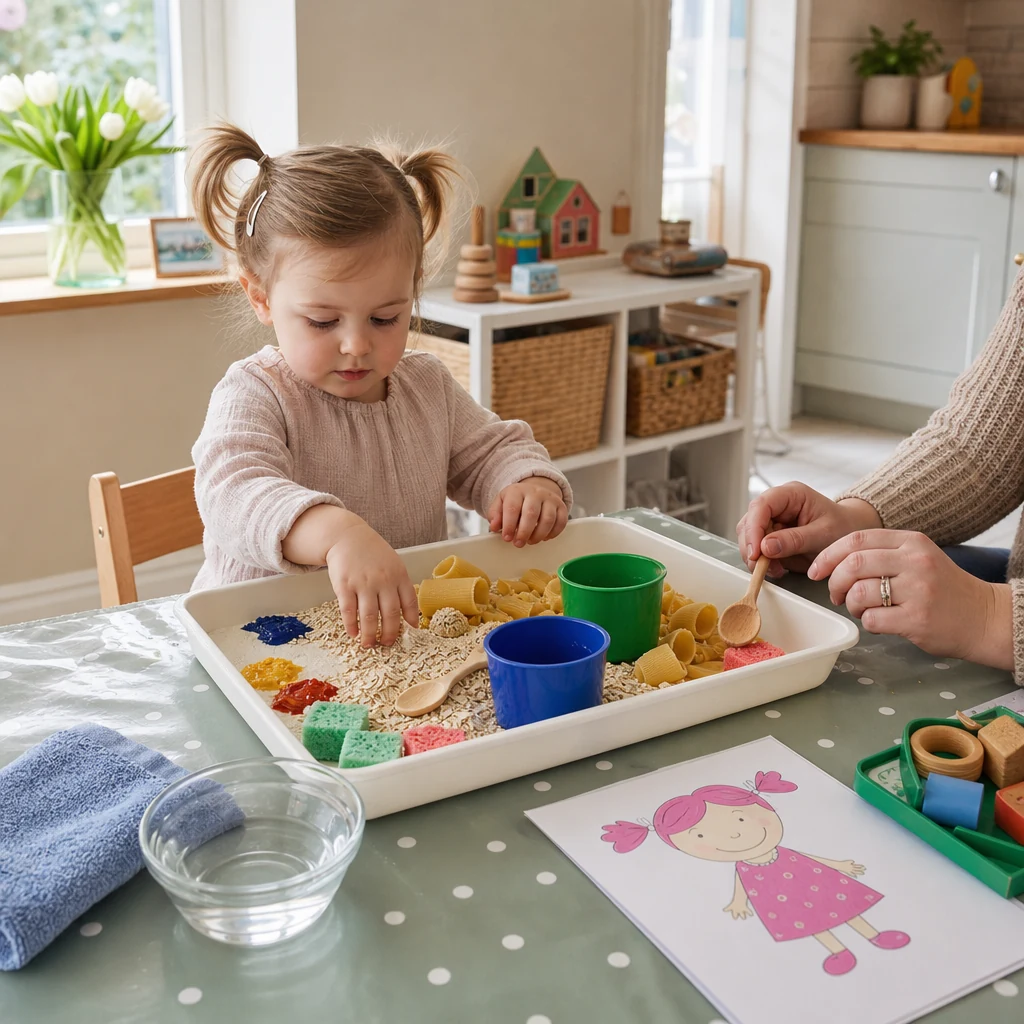
You do not need expensive resources to offer good messy play. Many of the best activities use simple items you may already have. The key is to choose safe materials, supervise closely and keep the setup realistic for your space.
- Water pouring: Use a washing up bowl, cups, spoons and a towel. Children can pour, scoop, splash gently and compare containers.
- Dough play: Use soft play dough with rolling pins, cutters or safe kitchen tools. Children can squash, roll, pinch and shape.
- Paint exploration: Offer washable paint with brushes, fingers, sponges or toy wheels. Keep the focus on marks and movement, not a finished picture.
- Dry tray play: Use oats, cereal, rice or pasta with scoops and bowls. Always choose materials that are suitable for your child’s age and stage.
- Nature mixing: Outdoors, children can mix leaves, petals, mud and water in a tray or bucket. This connects sensory play with the natural world.
For younger children, keep materials large, safe and closely supervised. Avoid anything that could be a choking risk. For children with sensitive skin or allergies, choose ingredients carefully and patch test where needed.
It is also fine to keep sessions short. Ten minutes of joyful, focused exploration is valuable. You can build up gradually as your child becomes more comfortable and you find what works for your home.
How to make messy play manageable
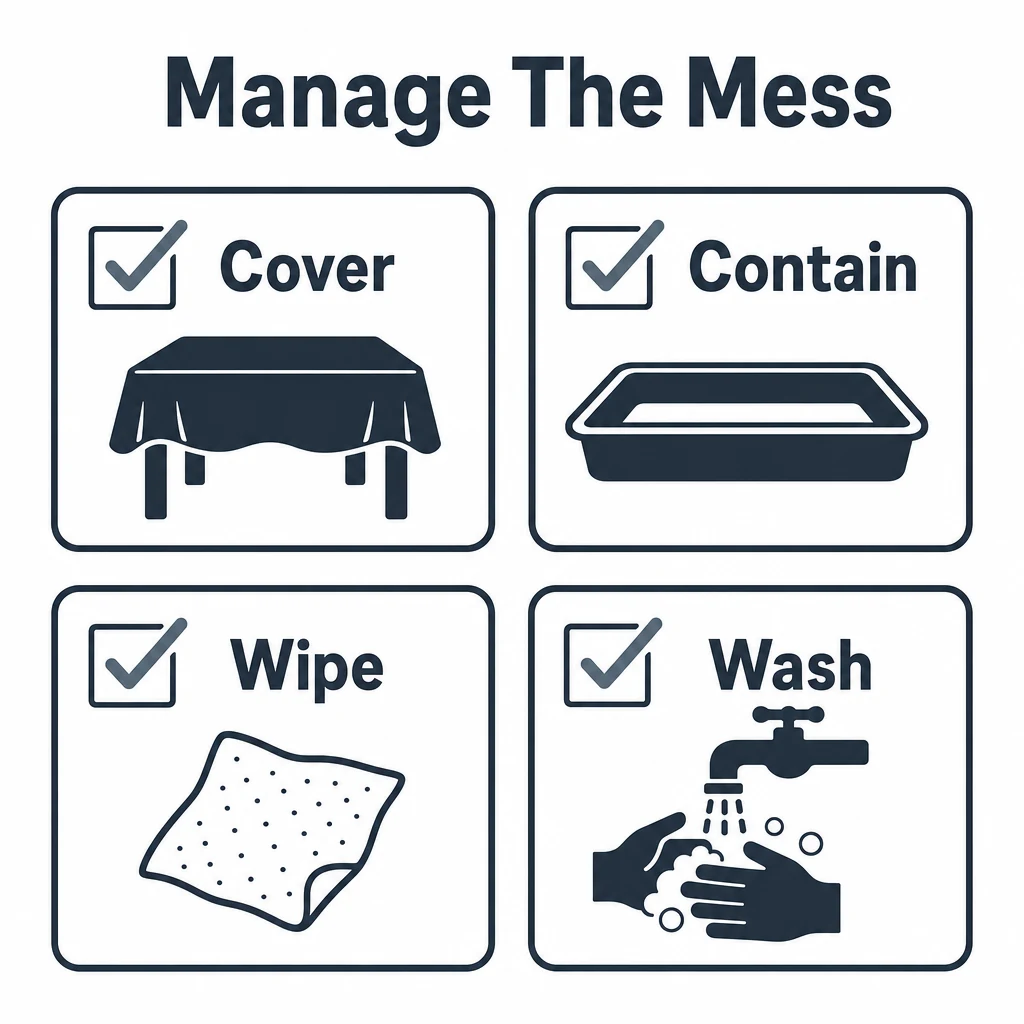
Messy play should feel inviting, not overwhelming. A little preparation makes a big difference. Choose a space that is easy to clean, such as a kitchen floor, bathroom, garden or covered table. Use a tray, mat, old sheet or washable cloth to define the play area.
Dress your child in clothes that can get messy. Keep wipes, a bowl of water or a towel nearby. Offer only a small amount of material at first, then add more if the activity is going well. Children often do not need a large setup to become deeply engaged.
It can also help to set simple boundaries. You might say, paint stays on the paper, water stays in the tray or sand stays on the mat. Young children will need reminders, but clear limits help them explore safely.
Try not to rush in too quickly. If the play is safe, give your child time to experiment. Adults can support by describing what they notice, asking gentle questions and joining in without taking over.
Messy play can also link beautifully with outdoor experiences. Activities using mud, leaves, water and natural textures sit alongside the benefits explored in outdoor learning for early childhood development.
- Messy play helps children learn through touch, movement, observation and repeated discovery.
- It supports physical skills, early thinking, language, confidence and social development.
- The process matters more than the finished result.
- Simple home activities with water, dough, paint or natural materials can be highly valuable.
- Clear boundaries and easy clean up routines make messy play easier for parents to manage.
Frequently asked questions
Is messy play suitable for babies and toddlers?
Yes, but it must be carefully chosen for their age and stage. Use safe, simple materials, supervise closely and avoid small items or anything that could be unsafe if placed in the mouth.
What if my child does not like getting messy?
Some children need time. Start with less messy options, such as dry pasta, water play with tools or painting with a brush. Let them watch first and join in when they feel ready.
Does messy play need to have a learning goal?
Not always. The learning often comes through the process. When children explore freely, they practise thinking, movement, language and confidence without needing a formal task.
How often should parents offer messy play at home?
There is no fixed rule. A short session once or twice a week can be useful, and everyday moments such as bath play, baking or garden play can also offer rich sensory learning.
Explore nurturing early years activities
At Minnie and Mamma Nursery, children are encouraged to learn through play, creativity, movement and caring support. Explore our activities to see how playful experiences help children grow in confidence.