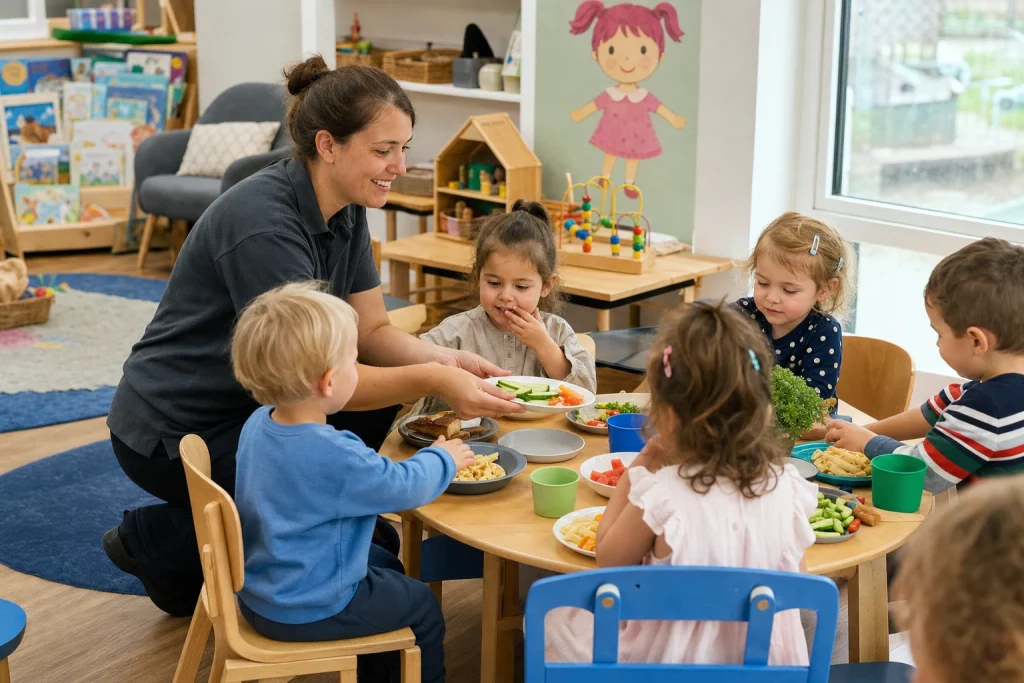
If your toddler refuses anything green, asks for the same lunch every day or suddenly rejects a food they loved last week, you are not alone. Fussy eating is one of the most common worries parents raise in the early years.
The good news is that gentle, consistent support can make a real difference. The aim is not to force a child to eat everything on the plate, but to help them feel calm, curious and confident around food.
Why toddlers can become fussy with food
Fussy eating can feel personal when you have shopped, cooked and served a meal with care. In reality, toddlers often refuse food for reasons that have very little to do with the food itself.
Young children are learning independence. Saying no is one of the clearest ways they can test choice and control. They are also developing strong preferences around taste, smell, colour, texture and routine. A food that seems ordinary to an adult can feel unfamiliar or overwhelming to a toddler.
Appetite can also vary from day to day. Some toddlers eat more during busy growth periods and less when they are tired, distracted or coming down with a minor illness. Others are more cautious with new foods and need repeated, relaxed exposure before they are ready to taste.
It helps to separate the parent role from the child role. Parents and carers decide what food is offered, when it is offered and where meals happen. The child decides whether to eat and how much. This approach keeps boundaries in place without turning the table into a battle.
If you are ever concerned about weight, growth, allergies, swallowing or a very restricted diet, it is sensible to speak with a GP, health visitor or qualified professional. Everyday fussy eating is common, but persistent worries deserve proper support.
Take pressure out of mealtimes
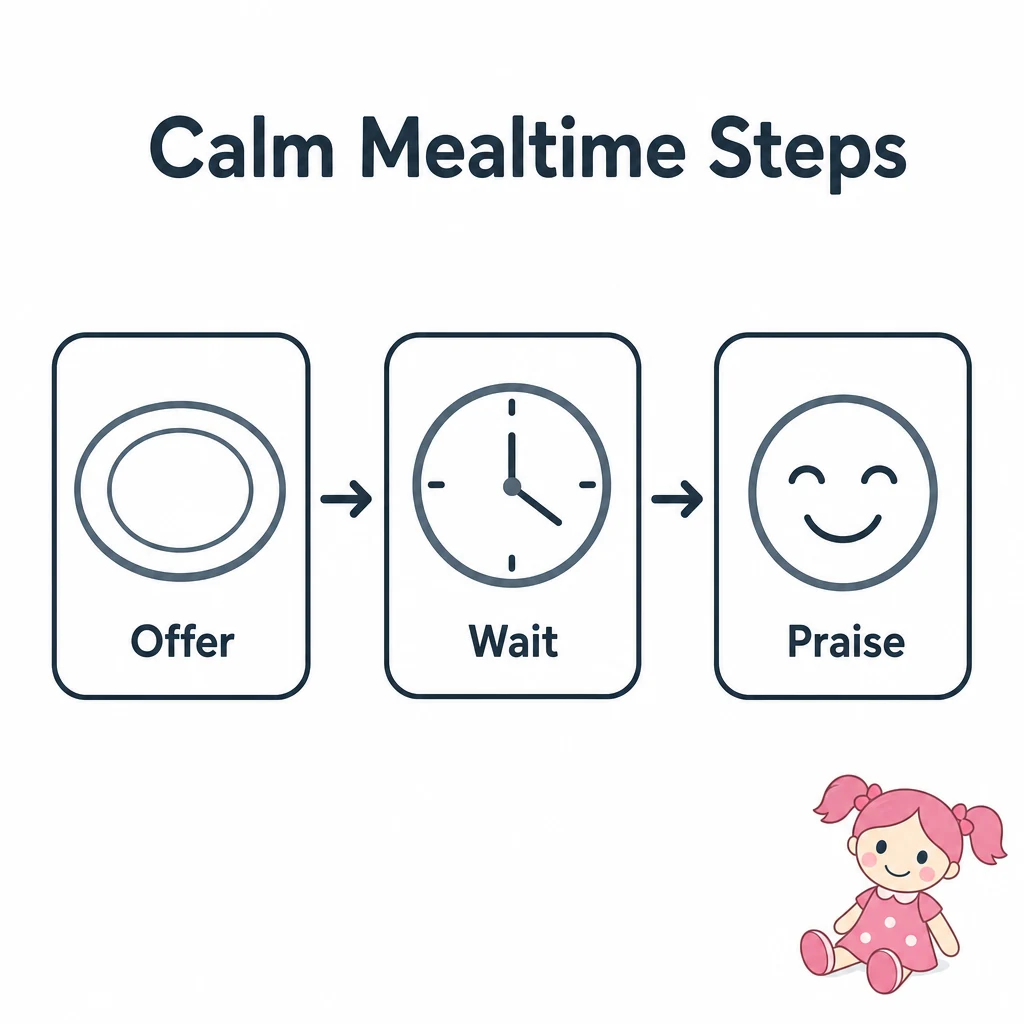
Pressure can make toddlers more resistant, even when it is meant kindly. Phrases such as one more bite, eat it for me or no pudding until you finish can create tension around food. Some children then focus more on avoiding the food than noticing whether they might like it.
A calmer approach is to offer small portions and keep your tone neutral. You might say, this is carrot, you can try it when you are ready, then move on with the meal. If your child does not eat it, try not to make the refusal the main event.
Small portions matter because a full plate can look daunting. A spoonful of a new food beside something familiar is often easier than a large helping. Your child can always have more if they want it.
It is also useful to create predictable mealtime routines. Sitting in the same place, washing hands before food, putting toys away and having a simple ending to the meal can all help toddlers know what to expect. Predictability supports children who find transitions difficult and can reduce the emotional build up before meals.
Food is closely linked to feelings. A toddler who feels rushed, watched or worried may struggle to explore. For more support with helping young children recognise and manage big feelings, Minnie and Mamma Nursery has also shared guidance on building emotional intelligence in toddlers.
Make new foods familiar before tasting
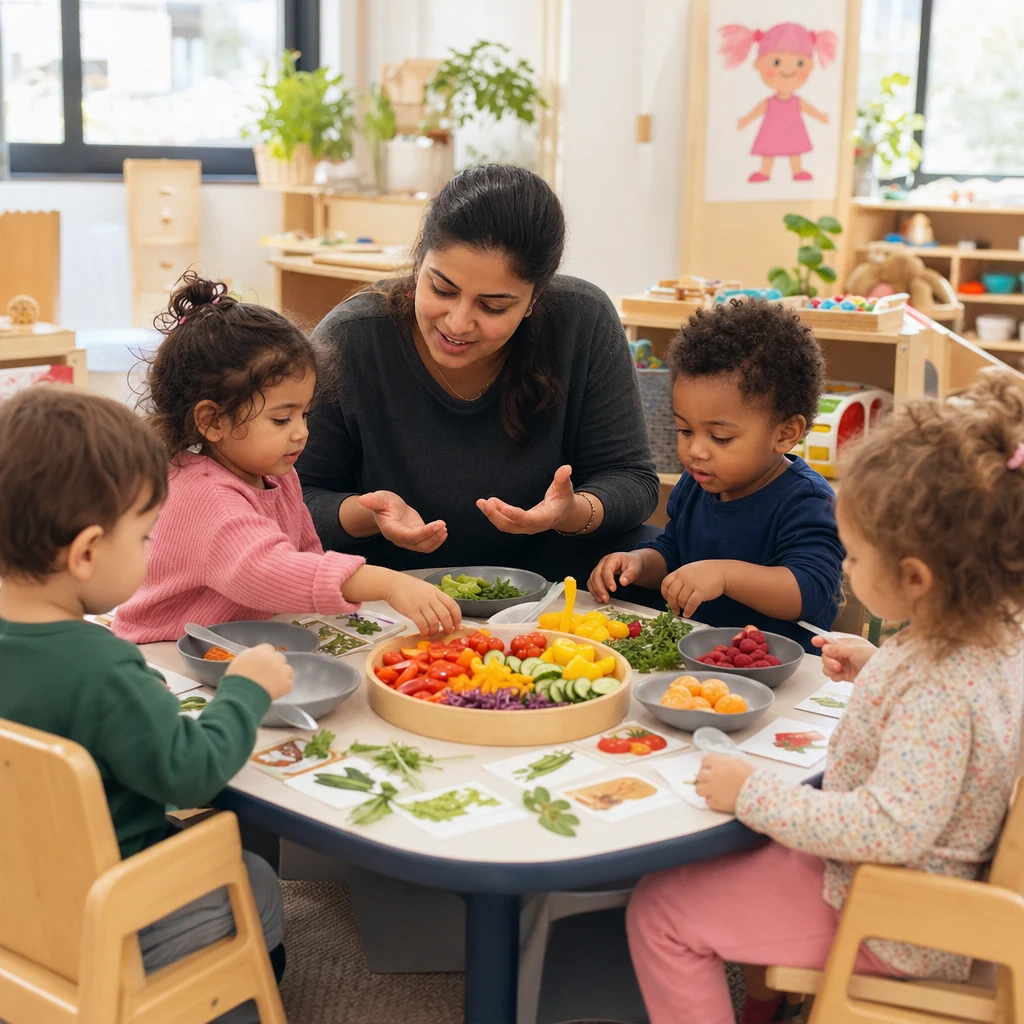
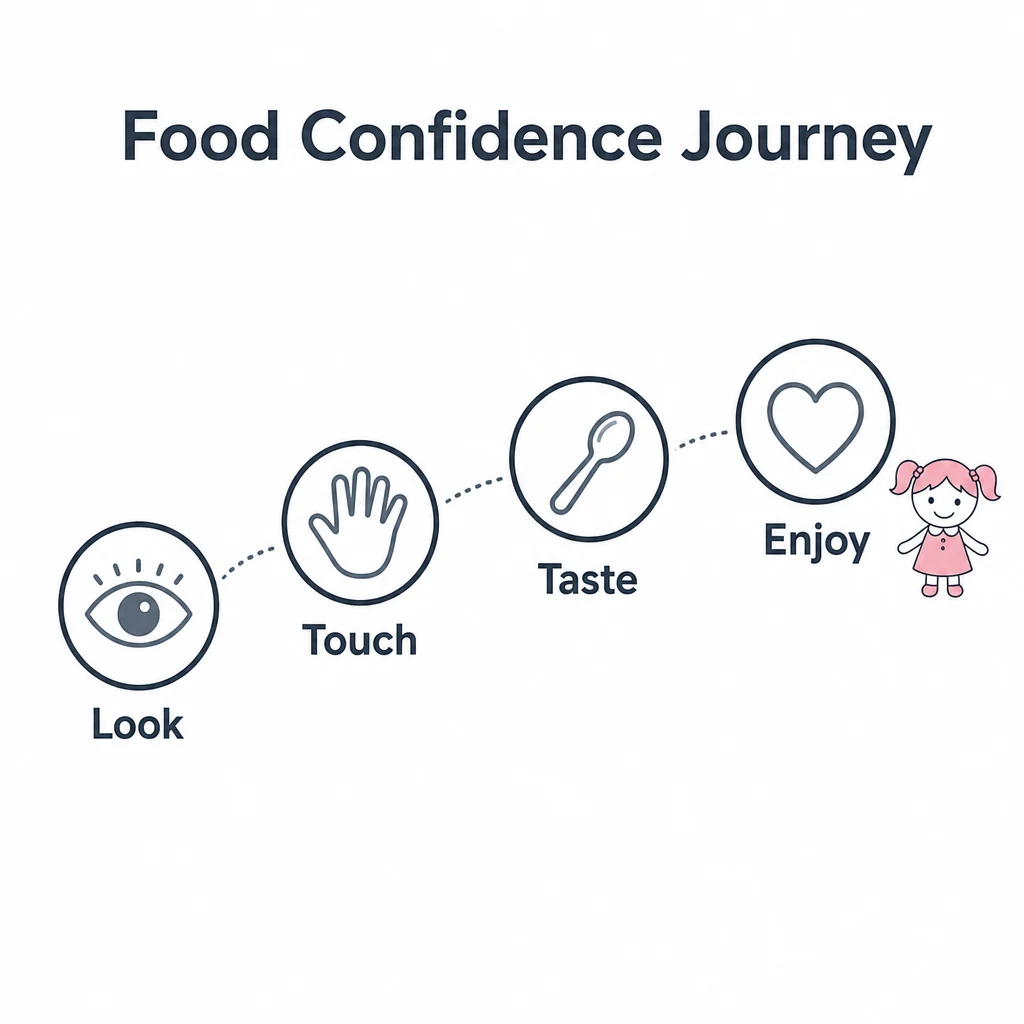
Trying a new food does not have to begin with eating it. For many toddlers, the first step is simply accepting the food on the plate. After that, they may be willing to touch it, smell it, lick it or take a tiny bite. Each step is progress.
You can help by talking about food in simple, sensory language. Instead of saying, it is yummy, try describing what the child can notice. This pepper is crunchy. This yoghurt is smooth. This pasta is warm. Neutral language gives them information without demanding agreement.
Repeated exposure is important. A child may need to see a food many times before it feels safe enough to try. That can be frustrating for parents, but it is part of learning. Keep offering small amounts without comment, and let familiarity build slowly.
Involving toddlers in food preparation can also reduce suspicion. They might wash fruit, stir a sauce, tear lettuce, put toppings on toast or choose between two vegetables. When children help, the food becomes less mysterious.
You can also use play away from the table. Pretend cooking, stories about food, sorting toy fruit and drawing favourite meals all help toddlers explore ideas around eating without pressure. The goal is to make food part of normal, positive life, not a test they have to pass.
Use familiar favourites as a bridge
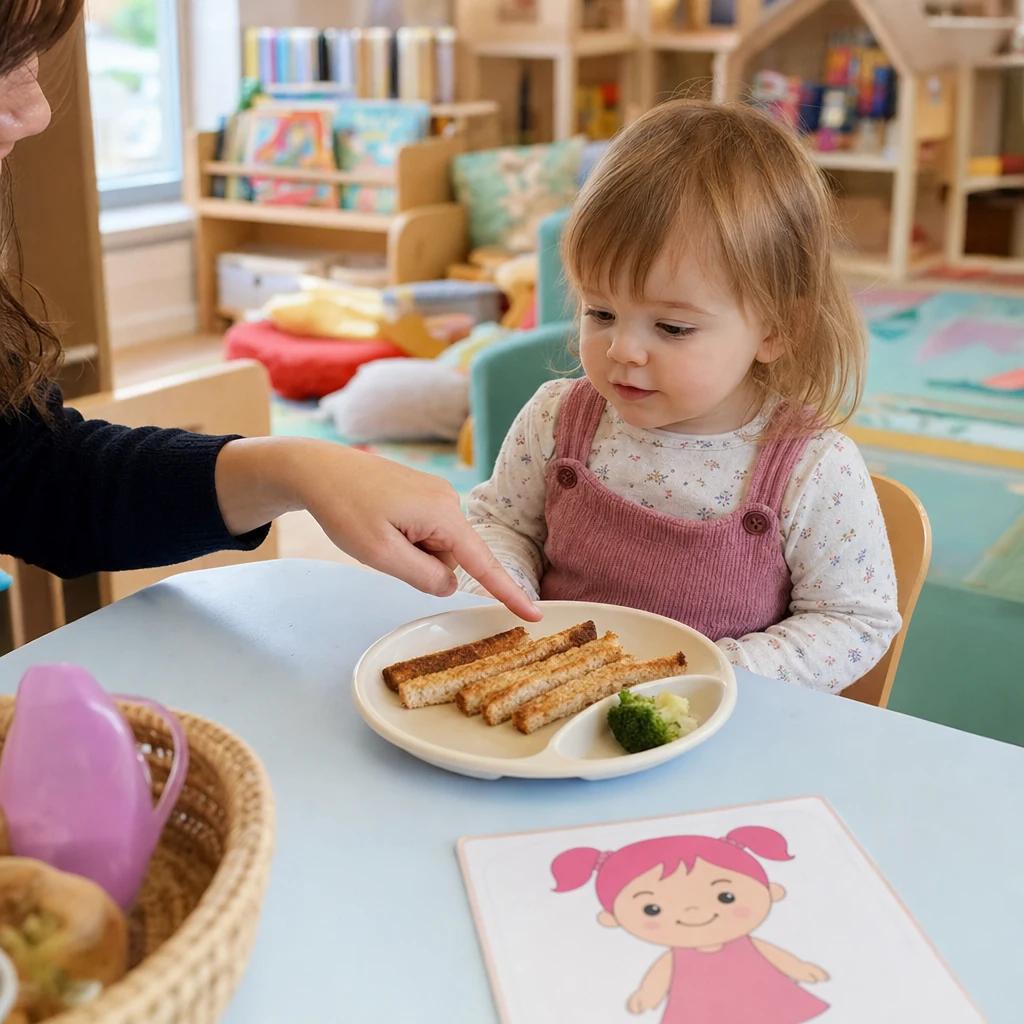
Many parents worry that serving familiar foods will make fussiness worse. In practice, familiar foods can be a useful bridge. If a toddler knows there is something on the plate they can eat comfortably, they may feel safer around something new.
Try pairing a new food with a reliable favourite. If your child likes pasta, add a small amount of a new sauce on the side. If they enjoy toast, offer a thin spread of something new on one corner. If they like plain rice, place a tiny portion of a new vegetable beside it.
Changing one thing at a time can help. A toddler who accepts cucumber slices may not accept cucumber sticks straight away. A child who eats grated cheese may reject melted cheese because the texture feels different. To adults these seem like small changes, but toddlers notice details.
It is also worth thinking about timing. A very hungry toddler may not cope well with experimenting, while a tired toddler may only want something predictable. New foods often work best when the child is rested and the meal is not rushed.
Nursery routines can support this process because children often become more open to food when they see trusted adults and other children eating calmly together. Families looking at childcare can explore how a warm daycare nursery setting supports daily care, routines and early learning.
Respond calmly when food is refused
Refusal is not failure. It is information. Your toddler may be telling you they are unsure, not hungry, tired, overwhelmed or simply in the mood to say no. A calm response keeps the door open for next time.
If a child refuses a food, avoid negotiating at length. You might say, you do not have to eat it, it can stay on your plate. This respects their boundary while keeping the food present and normal.
Try not to replace meals immediately with a preferred snack. If toddlers learn that refusal always brings a favourite alternative, they may hold out for that. Instead, include at least one familiar food in the original meal so there is something available.
It can help to look at food intake across several days rather than one meal. Toddlers rarely eat evenly. One lunch may be tiny and another may surprise you. Looking at the bigger picture can reduce the urge to react strongly in the moment.
Praise effort rather than outcome. If your child touched a new food, smelled it or allowed it on the plate, you can acknowledge that calmly. You smelled the tomato today. That was brave trying. This builds confidence without making eating feel like a performance.
Build a positive relationship with food over time
The long term aim is for children to trust their bodies, enjoy shared meals and feel able to explore a variety of foods. This happens through steady repetition, not perfect meals.
Family style routines can help when possible. Sitting together, even briefly, shows toddlers that eating is a social part of the day. Adults can model trying foods, using cutlery, drinking water and talking pleasantly at the table. Children learn a great deal from watching.
Avoid labelling children as fussy in front of them. Toddlers can quickly absorb labels and act them out. Instead of saying, she never eats vegetables, you might say, she is still learning about vegetables. That small shift leaves room for change.
Keep treats neutral too. When some foods are described as rewards and others as duties, children may value the reward foods more strongly. It is fine to enjoy sweet foods as part of family life, but try not to make them the prize for eating something else.
Above all, be patient with yourself. Feeding toddlers can be emotional, especially when parents are busy or worried. A calm, consistent approach gives children the best chance to grow in confidence, one meal at a time.
- Fussy eating is common in the toddler years and often reflects independence, caution or changing appetite.
- Small portions, predictable routines and a calm tone can reduce pressure at mealtimes.
- New foods may need to become familiar through seeing, touching and smelling before tasting.
- Pairing new foods with familiar favourites can help toddlers feel safer and more willing to explore.
- Speak with a qualified professional if you are concerned about growth, allergies, swallowing or a very restricted diet.
Frequently asked questions
Should I make my toddler finish everything on the plate?
It is usually more helpful to let toddlers listen to their appetite. You can decide what to offer and when, while your child decides whether to eat and how much. This keeps mealtimes calmer and supports healthy self regulation.
How many times should I offer a food my toddler refuses?
There is no fixed number that works for every child. Some toddlers need to see a food many times before they are ready to taste it. Keep portions small, stay neutral and continue offering it alongside familiar foods.
Is it okay to hide vegetables in sauces?
Hidden vegetables can add variety to meals, but they should not be the only approach. Toddlers also need chances to see, touch and learn about vegetables openly so they can build confidence with them over time.
When should I ask for help with fussy eating?
Ask for professional advice if your child eats a very limited range, seems distressed around food, has possible allergies, struggles with chewing or swallowing, or if you are worried about growth or wellbeing.
Support for happy everyday routines
Mealtimes are just one part of helping toddlers feel safe, confident and ready to learn. Minnie and Mamma Nursery supports children with caring routines, gentle encouragement and a warm early years environment.